

The mind that is wise mourns less for what age takes away; than what it leaves behind.
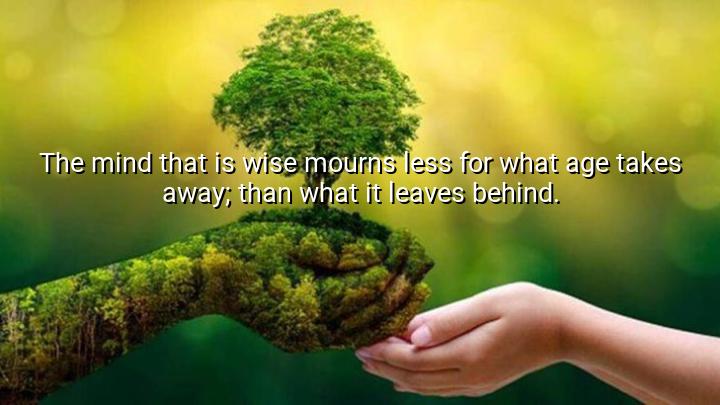




William Wordsworth’s quote, "The mind that is wise mourns less for what age takes away; than what it leaves behind," reflects a mature perspective on the passage of time and the process of aging. Wordsworth suggests that as one grows older, a wise mind becomes more focused on the things that remain, rather than the losses associated with age. While youth is often concerned with what is taken away by aging—whether it’s health, beauty, or vitality—wisdom allows individuals to appreciate the things that endure, such as memories, wisdom, and the legacy they leave behind.
The quote emphasizes that as people age, the loss of physical or material attributes might seem less important to those who have acquired a deeper understanding of life. Rather than lamenting over what age has taken, the wise mind focuses on the gifts of experience and insight that aging brings. The mournful aspect of aging becomes less about what’s gone and more about what’s left—how one chooses to use the time remaining, and how they continue to contribute to life in meaningful ways.
Wordsworth, a key figure in the Romantic movement, often explored themes of nature, emotion, and the passage of time in his poetry. His reflections on aging align with the values of the Romantics, who believed that wisdom and personal growth came from a deep connection to nature and an understanding of life’s inevitable cycles. In this quote, Wordsworth conveys a philosophical acceptance of aging, emphasizing the value of inner growth and the ability to find peace with the passage of time.
In essence, Wordsworth’s quote speaks to the process of embracing aging with grace and perspective. For the wise, aging becomes a time of reflection, where the focus shifts from what is lost to what remains and what can still be gained. It serves as a reminder that age should not be feared, but accepted as a time for deeper wisdom and appreciation of life’s enduring gifts.

LNLuan Nguyen
This makes me think of my grandfather. Even in his final years, he didn’t mourn his declining health, but he often talked about things he wished he’d done differently. It’s like Wordsworth is pointing to the weight of unfinished emotional business. How do we prepare ourselves to age wisely—not just physically, but mentally and spiritually? Maybe the quote is really about the importance of reflection and emotional resolution long before old age sets in.
NTTran Nhat Trung
Interesting perspective. It flips the usual narrative that aging is mostly about loss. Wordsworth seems to be saying the deeper sorrow lies in what lingers—in other words, the burdens we can’t shake. I’m wondering: what does this imply about healing and emotional work as we get older? Should we be more proactive about resolving inner conflicts earlier in life so we don’t carry them into old age? That’s a pretty sobering thought.
TMHa thi mieng
I find this quote haunting. It suggests that the residue of life—memories, habits, emotional wounds—can weigh heavier than any physical deterioration. What exactly are we supposed to do with what’s left behind? Is it possible to consciously let go of the mental clutter aging brings? Or is that burden what ultimately shapes our character? I’d love to hear how others interpret this emotionally—it’s not as straightforward as it first seems.
TNTuan Minh Tran Nguyen
Such a powerful line. I’ve always thought aging was about coping with what's lost—youth, energy, people we love. But this makes me wonder if the real struggle lies in what age forces us to carry forward: grief, memories, perhaps guilt or unfulfilled dreams. Can we learn to let go of those things too? Maybe the true wisdom isn’t just in acceptance but in learning how to travel lighter with time.
NVnguyen vi
This quote really makes me reflect. Is Wordsworth saying that the hardest part of aging isn’t loss, but the emotional or psychological burdens that remain? Maybe regrets, unresolved memories, or even past mistakes linger more painfully than physical decline. I’m curious—can a wise mind truly find peace with what’s left behind, or is mourning part of wisdom too? It raises a question about whether emotional clarity increases or decreases with age.