

The child is father of the man.
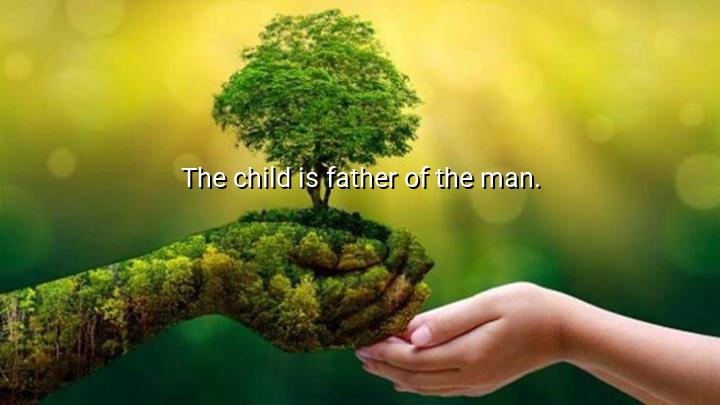




In this quote, William Wordsworth expresses the idea that the experiences and characteristics developed in childhood have a profound impact on shaping the adult a person becomes. The phrase "The child is father of the man" suggests that our early years are not just formative but foundational in influencing the decisions, values, and behavior we carry into adulthood. Wordsworth emphasizes that the seeds of our future selves are planted in childhood, and those early influences continue to shape our identity and actions as adults.
Wordsworth’s quote also implies that the innocence and wonder of childhood, along with the lessons we learn during those formative years, contribute to the character we develop later in life. It highlights the idea that the person we grow into is deeply tied to our early experiences, whether in terms of education, family, or societal influences. In essence, the quote suggests that adulthood is a continuation of childhood, and what we become as adults is a direct result of how we were shaped as children.
The origin of this quote comes from William Wordsworth, an English Romantic poet who was deeply interested in the themes of nature, childhood, and the human experience. This line comes from his poem My Heart Leaps Up, in which he celebrates the enduring connection between childhood and adulthood. Wordsworth often explored the idea that the purity and natural instincts of children should be preserved and celebrated throughout one’s life.
Ultimately, Wordsworth’s quote serves as a reminder of the deep and lasting influence that childhood experiences have on who we become as adults. It underscores the importance of nurturing and understanding children, as their development shapes the future of society. The quote invites reflection on how our early years continue to shape our perceptions, actions, and relationships throughout our lives.

AAdministratorAdministrator
Welcome, honored guests. Please leave a comment, we will respond soon