

For I have learned to look on nature, not as in the hour of thoughtless youth, but hearing oftentimes the still, sad music of humanity.
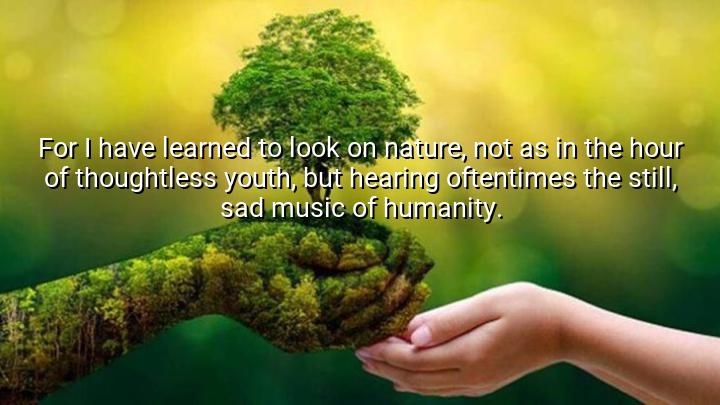




William Wordsworth’s quote, "For I have learned to look on nature, not as in the hour of thoughtless youth, but hearing oftentimes the still, sad music of humanity," reflects a shift in his perception of nature over time. The phrase "thoughtless youth" refers to the carefree, naive approach to life often experienced in adolescence, where the world and nature are viewed with wonder, but without much deeper reflection. Wordsworth contrasts this with the more mature perspective he has developed, where nature is not just something to admire, but a backdrop for understanding the complexities of human existence.
The mention of "the still, sad music of humanity" adds a poignant layer to this shift in perception. Wordsworth is expressing how he has come to see nature as intertwined with human suffering, melancholy, and the impermanence of life. The "music" is metaphorical, representing the quiet, often sorrowful rhythm of human life that is felt in nature, whether through loss, struggle, or reflection. This suggests that as we grow older, our experiences shape the way we perceive the world, and nature becomes a mirror for our inner emotions and the human condition.
The origin of this quote lies in Wordsworth’s Romantic philosophy, which emphasizes the emotional and spiritual connection between humans and the natural world. As a poet, he believed that nature had the power to evoke deep reflection and personal growth. However, the quote acknowledges that with maturity, our understanding of nature becomes more nuanced, often reflecting the sadness and struggles of life rather than the simplistic joy of youth.
In essence, this quote explores the idea that as we age and accumulate life experiences, we start to see nature not just as a source of beauty or inspiration, but also as a space where the realities of human suffering and existential reflection are echoed. Wordsworth suggests that the passage from youthful innocence to more contemplative maturity allows us to hear the deeper, more somber notes of human life, even in the quietest corners of the natural world.

AAdministratorAdministrator
Welcome, honored guests. Please leave a comment, we will respond soon