

The light of lights looks always on the motive, not the deed, the shadow of shadows on the deed alone.
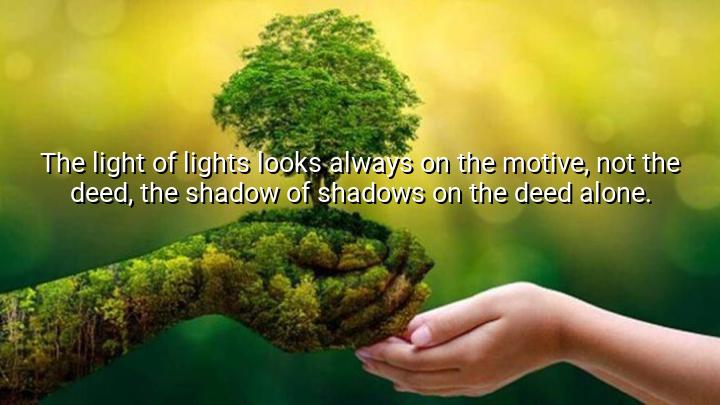




The quote by William Butler Yeats emphasizes the distinction between motive and deed in evaluating human actions. Yeats suggests that the light of lights, representing higher or divine understanding, focuses on the motive behind actions, rather than just the actions themselves. This indicates that true insight or judgment comes from understanding the intentions and inner reasons for doing something, rather than merely observing the surface-level actions.
In contrast, Yeats introduces the concept of the shadow of shadows, which represents a lower or more superficial perspective. This shadow only concerns itself with the deed—the outward manifestation of an action—without considering the underlying motive or intent. The shadow symbolizes a more limited, perhaps more judgmental, way of viewing actions, focusing solely on what is done, rather than why it is done.
The quote suggests that true wisdom or understanding comes from looking deeper, from the light of deeper insight that sees the heart and intentions behind actions. It implies that outward actions can be misinterpreted or misunderstood if the motive is not taken into account. The contrast between light and shadow serves as a metaphor for the difference between profound understanding and shallow judgment.
Ultimately, Yeats invites us to reconsider how we judge others, urging us to move beyond focusing solely on deeds and to look at the deeper motive that drives human behavior. This perspective promotes a more compassionate and thoughtful approach to evaluating actions, recognizing the complexity of human intent.

C9My Chau 9a2
This quote really speaks to the inner spiritual struggle—trying to do the right thing even when misunderstood. It makes me wonder, is it more important to act rightly or to be seen as acting rightly? If only the ‘light of lights’ knows our true motives, then is peace of conscience more valuable than public approval? That’s a powerful but isolating truth if we take it seriously.
NVMinh Ngoc Vu
I'm torn by this quote. On one hand, I want to believe that intentions matter most. On the other hand, actions have real consequences. If someone means well but causes harm, how much weight should we give their motive? Does Yeats suggest that a higher moral order sees the bigger picture, or is this just poetic idealism in a world that deals in results?
TNTrang Nguyen
This quote struck me as a subtle critique of hypocrisy. The ‘shadow of shadows’ feels like a metaphor for superficial or corrupt systems of judgment. Do you think Yeats is warning us about how institutions, or even people, can focus too much on appearances and ignore the sincerity behind actions? If so, how can we resist falling into that trap ourselves?
DTPhan Dinh Thai
Is Yeats implying that divine or enlightened perception values inner intention more than visible behavior? That makes me think—how often do we misjudge others because we only see their deeds? If we’re to aspire to the ‘light of lights,’ does that mean we should train ourselves to look deeper into people’s motivations before passing judgment? It’s hard, but maybe more humane.
GDGold D.dragon
Yeats's imagery here is fascinating. ‘Light of lights’ and ‘shadow of shadows’ feel almost like metaphysical forces—divine understanding versus worldly judgment. But it makes me wonder: is this why people so often feel misunderstood? Maybe our best intentions go unseen while our mistakes get magnified. How do we cope with being judged by our actions alone when our true motives are invisible to everyone else?