

The dream, alone, is of interest. What is life, without a dream?
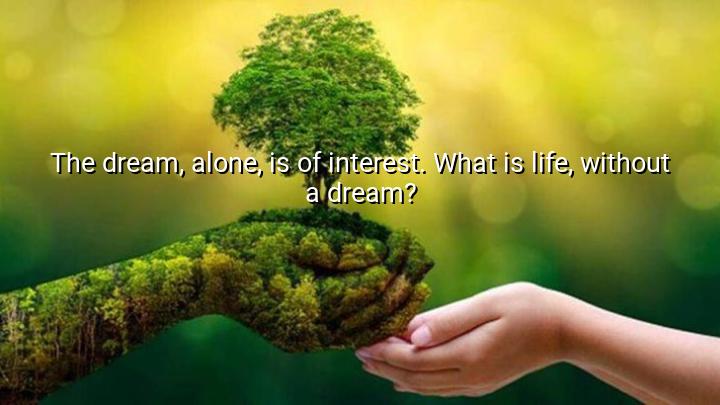




The quote "The dream, alone, is of interest. What is life, without a dream?" by Edmond Rostand speaks to the centrality of dreams and aspirations in shaping one's life. Rostand suggests that a dream—whether it is a personal goal, a vision for the future, or a deep-seated hope—is what gives meaning to existence. Without a dream, life can feel aimless or lacking in direction. The dream provides the inspiration and motivation to move forward, making it an essential part of what makes life worth living.
Rostand’s quote emphasizes that dreams are not just whimsical thoughts but the driving force behind action and achievement. By stating that "the dream, alone, is of interest," he highlights the importance of having a vision that propels you to make the most out of your life. A person with a dream has a purpose, a goal that guides their decisions and gives them a sense of fulfillment.
The phrase "What is life, without a dream?" poses a rhetorical question that prompts reflection on the value of having aspirations. It implies that life without dreams is lacking in purpose and meaning. Dreams give structure to our lives, and they inspire us to strive for something greater, pushing us to grow and evolve as individuals.
The origin of this quote comes from Edmond Rostand, a French dramatist and poet, best known for his play Cyrano de Bergerac. Rostand’s works often explore themes of idealism, romanticism, and aspiration, and this quote reflects those themes, suggesting that the pursuit of dreams is what truly defines a rich and meaningful existence. Through his writing, Rostand champions the idea that dreams are what make life truly worthwhile.

NLNhan Le
Rostand’s focus on the dream alone raises an interesting point about imagination versus reality. Can dreams offer an escape, a form of art, or a source of comfort independent of actual life circumstances? How do dreams function differently for artists, thinkers, and everyday people? This quote beautifully captures the universal and timeless nature of dreaming.
AAristot
This quote leads me to question how societal expectations impact our relationship with dreams. Are we encouraged to dream boldly, or do pragmatic concerns often suppress our visions? How might reclaiming the importance of dreaming affect mental health and well-being? It’s a compelling call to honor the dreamer within us all.
CChanh
Rostand’s words provoke me to consider how dreams shape identity and personal growth. Are dreams merely fantasies, or do they function as blueprints for our values and aspirations? How does nurturing a dream influence our resilience and creativity? This quote emphasizes the intangible but powerful role dreams play in human experience.
HNHuy Nguyen
Reading this, I’m intrigued by the suggestion that life without a dream might be empty or lacking. But what about those whose dreams change or fade over time? Does the quote imply that we must always have a dream to live fully, or can acceptance and presence replace dreaming? It invites a philosophical discussion on the nature of purpose.
LNLioky Nguyen
This statement makes me reflect on the role of dreams in motivating action versus simply inspiring thought. Are dreams valuable only when they lead to tangible outcomes, or does the dream’s existence alone enrich life? How do different cultures or individuals view the balance between dreaming and doing? It’s a poetic reminder of the human spirit’s capacity for hope.