

Strength alone knows conflict, weakness is born vanquished.
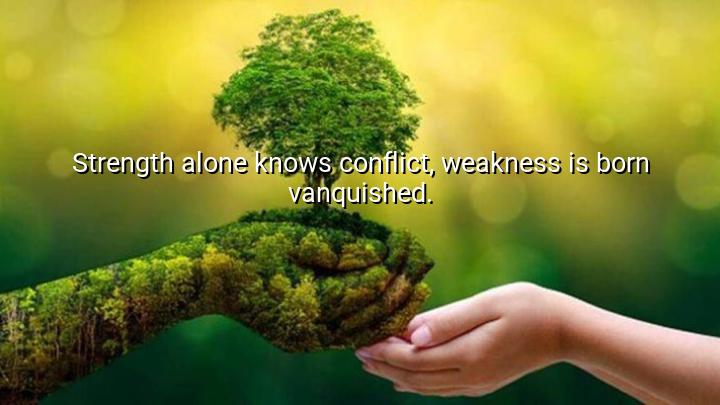




The quote "Strength alone knows conflict, weakness is born vanquished" by Sophie Swetchine speaks to the relationship between inner strength and struggle. It suggests that only those with true strength are able to engage in conflict, whether it be physical, emotional, or intellectual. Weakness, on the other hand, is associated with defeat, as those who lack resilience or fortitude are often overwhelmed before they can even attempt to face challenges.
Swetchine, a Russian-born writer and intellectual, often explored themes of resilience and personal growth in her work. Her quote reflects her belief in the power of inner fortitude and the necessity of confronting adversity head-on. She recognized that true strength is not only about overcoming external challenges but also about having the courage to face one’s own vulnerabilities.
The phrase implies that conflict is an inevitable part of life, and only those who possess strength—whether through character, resolve, or courage—are truly prepared for it. Weakness, in contrast, is not about physical frailty, but rather the mental or emotional inability to face and overcome difficulties. This idea emphasizes the importance of mental resilience as a key to navigating life’s struggles.
Swetchine's message is one of empowerment and self-reliance, urging us to cultivate the strength needed to confront life's difficulties head-on. It speaks to the notion that the greatest victories in life are often achieved through perseverance and the willingness to confront and overcome challenges without surrendering to weakness.

HCNguyen Hung Cuong
I find this quote both motivating and harsh. It seems to define human worth through struggle alone. But what about those who’ve been beaten down repeatedly—are they truly weak, or just tired? Is there a danger in equating struggle with virtue and weakness with failure? Maybe we need to rethink what strength looks like—it might include compassion, humility, and endurance, not just confrontation and survival.
TLTuyet Lan
Swetchine’s line makes me reflect on the paradox of conflict. Is it that strength invites challenge, or that challenge reveals strength? It reminds me of how heroes in stories are always tested. But then I wonder—does this mean the weak are invisible to conflict, or simply crushed by it too early to be remembered? The quote is powerful, but feels like it leaves no room for growth or transformation.
UDPhuong Uyen Dang
There's something empowering about this quote, especially for those who’ve been through real challenges. It’s like a validation that conflict isn’t failure—it's a sign you're strong enough to be in the fight. But I also wonder, does this overlook people who avoid conflict as a way to survive or maintain peace? Can you still be strong even if you choose not to engage in every battle?
TTThao TTP
This made me think about how we define strength in our culture. Swetchine seems to be suggesting that only those who are strong even get the chance to fight—that weakness gives in before the battle starts. But what if weakness isn’t the absence of strength, but a stage before it? Can conflict be a way to develop strength, not just reveal it? That would make the quote feel less fatalistic.
NTMy Nguyen Tra
Swetchine's quote sounds bold, almost warrior-like in tone, but it raises an important question for me: does this view unintentionally glorify suffering? By suggesting that strength is defined through conflict, are we encouraging a mindset where peace or vulnerability gets undervalued? I worry that this perspective might alienate people who survive quietly, without dramatic battles, but with incredible emotional strength nonetheless.