

Solitude vivifies; isolation kills.
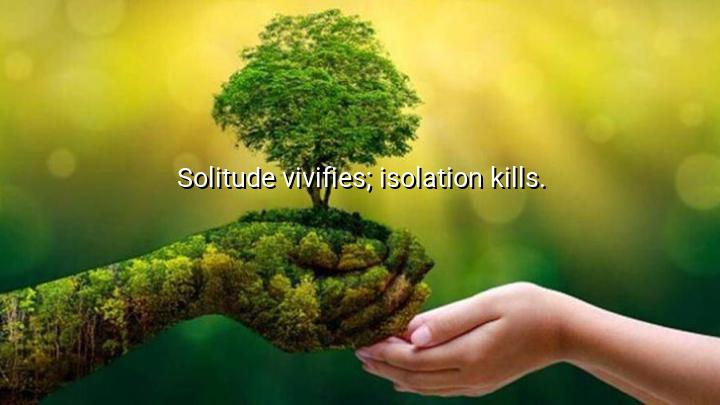




The quote "Solitude vivifies; isolation kills" by Joseph Roux draws a sharp yet important distinction between two similar but profoundly different states: solitude and isolation. Roux argues that solitude, when chosen and embraced, is a source of renewal, creativity, and inner strength—it vivifies, meaning it brings energy and life to the spirit. On the other hand, isolation, especially when forced or prolonged, is damaging, leading to emotional and psychological distress.
Joseph Roux was a 19th-century French priest and writer, best known for his collection of reflective thoughts and aphorisms in Meditations of a Parish Priest. In his writings, he explored themes of human nature, faith, and emotional well-being. This quote reflects his insight into the human need for balance between connection and quiet introspection. He recognized that while solitude can enrich the soul, isolation—a lack of meaningful contact—can erode it.
The difference lies in intention and perception. Solitude is a chosen state, often filled with peace, clarity, and self-discovery. It offers the space to think, feel, and create without distraction. In contrast, isolation feels imposed—a separation from others that leads to loneliness, alienation, and sometimes even despair. Roux’s words warn us to seek and cherish solitude, but to guard against slipping into isolation.
Ultimately, this quote is a timeless reminder of the delicate balance in our emotional lives. When embraced wisely, solitude nourishes the spirit; but when we become disconnected from others and ourselves, isolation can take a heavy toll. Roux encourages us to be mindful of how we spend our time alone—and to ensure that our solitude is life-giving, not life-draining.

Pphanh
This quote makes a powerful distinction, but I feel it oversimplifies a bit. Not everyone chooses isolation—sometimes people are pushed into it by circumstance, trauma, or society. So can we always control whether we experience solitude or isolation? And what about people who crave solitude but are forced into overstimulation? It’s a thought-provoking quote, but I’d love to hear how others define and experience the line between these two states.
GBNguyen Bui gia bao
This quote hit me hard. It makes me think about times in my life when I felt totally alone—but sometimes that solitude was powerful, and other times it left me hollow. What’s the real determinant here? Is it about purpose? Maybe solitude feels life-giving when it’s tied to creativity or reflection, but isolating when there’s no direction. I wonder if this distinction could be used in therapy or mental health education.
BAbao anh
I’m intrigued by how this quote implies that the quality of being alone depends not just on the act but on the emotional state behind it. Solitude seems voluntary, enriching. Isolation feels forced, damaging. But how does one transform isolation into solitude? Can community and self-awareness help in that transition? I’m left thinking about how mental health plays a huge role in making solitude feel like a choice rather than a sentence.
PMPham My
Roux’s words are striking, especially in a world that romanticizes both solitude and hustle culture. But it raises a question for me: how do we recognize when solitude becomes toxic isolation? Sometimes it’s a slow slide—what starts as self-care turns into withdrawal. What signs should we watch for, and how can we re-engage before it’s too late? This quote feels like a gentle but serious warning we often overlook.
TNtruc ngoc
This quote really captures something I’ve always felt but struggled to put into words—the fine line between being alone and feeling cut off. It makes me wonder: what’s the real difference between solitude and isolation? Is it just our mindset, or do circumstances and support systems play a role? It seems like one empowers and the other drains. I’d love to explore how people consciously shift from isolation to more nourishing solitude.