

People who are alone all the time never grow. Those hermits just stay the same. It's only through relationships. Relationships change us and make us grow.
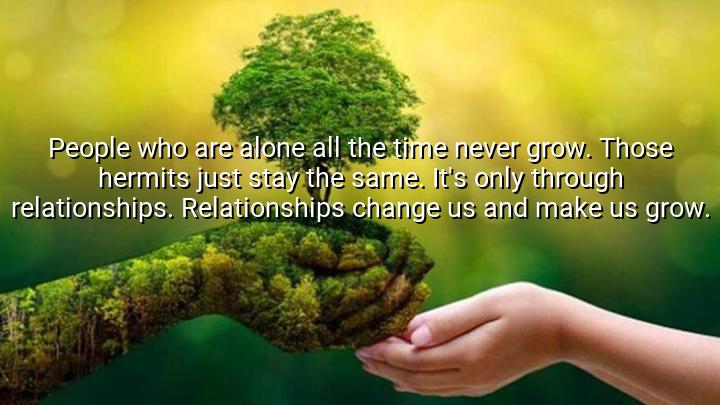




The quote, "People who are alone all the time never grow. Those hermits just stay the same. It's only through relationships. Relationships change us and make us grow," is from Viola Davis, an American actress and producer known for her powerful performances in both film and television. In this statement, Davis highlights the importance of human connection and interaction in personal development. She suggests that isolation prevents growth, whereas engaging with others allows individuals to evolve emotionally, mentally, and socially.
Davis contrasts the idea of isolation with the growth that comes through relationships. By referencing hermits, individuals who choose to live in complete solitude, she implies that without connection to others, a person’s experiences and perspectives remain stagnant. The hermit metaphor underscores how cutting oneself off from relationships can lead to emotional and intellectual stasis.
The statement emphasizes the transformative power of relationships. According to Davis, it is through relationships that we are challenged, supported, and pushed to confront aspects of ourselves that we may not have been aware of. The dynamics of interacting with others—whether in friendships, family, or romantic relationships—offer opportunities for growth and self-discovery, teaching us lessons that we wouldn't encounter in solitude.
Ultimately, Davis’ quote emphasizes that personal growth is often a communal experience. Relationships serve as a catalyst for change, helping individuals expand their understanding of themselves and the world around them. By valuing connection and interaction, we open ourselves up to the growth and transformation that come from shared experiences and emotional bonds with others.

HLTruong Hoang Linh
This quote challenges the romantic ideal of the solitary genius or hermit. Does it suggest that meaningful growth demands vulnerability and openness to others? How do people overcome fear of intimacy or rejection to engage in growth-promoting relationships? It would be interesting to discuss strategies for cultivating relationships that genuinely foster transformation.
VPNguyen vu phong
Davis’ words highlight the importance of connection, but I wonder about cultural or individual differences. In some traditions, solitude and meditation are highly valued for growth. Does this perspective apply universally, or is it more reflective of Western social values? Also, how might technology-mediated relationships fit into this idea of growth through connection?
PPhanh
Reading this, I’m intrigued by the idea that relationships are catalysts for change. But what happens when relationships are toxic or limiting? Can they stunt growth as much as solitude? It raises questions about the quality versus quantity of social interactions and how different dynamics influence personal evolution.
QHHuy Quang Ha
This statement resonates, but I wonder if it overlooks the value of solitude. Can people who spend a lot of time alone still evolve emotionally and intellectually? How do relationships specifically facilitate growth—through conflict, support, or new perspectives? I’d be interested to explore how introverts or those who prefer solitude experience personal development compared to those more socially engaged.
MMin
Viola Davis’ quote makes me think deeply about the role of human connection in personal development. Is it really impossible to grow in isolation, or can solitude also foster self-reflection and growth? I’m curious how different types of relationships—supportive or challenging—impact growth. Does this mean that growth requires external stimuli, or can internal processes alone bring about change?