

No woman has to be a victim of physical abuse. Women have to feel like they are not alone.
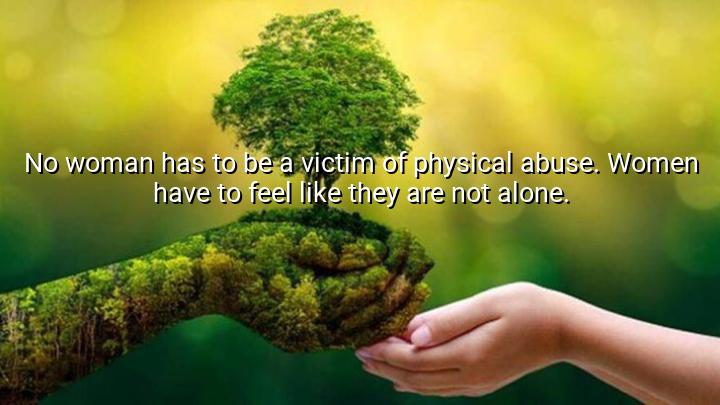




The quote "No woman has to be a victim of physical abuse. Women have to feel like they are not alone." by Salma Hayek speaks to the importance of empowerment and support for women facing domestic violence. Hayek emphasizes that physical abuse is never justified, and no woman should feel trapped in an abusive situation. She also highlights the necessity of making women feel supported and connected, as isolation often plays a major role in allowing abuse to continue. By fostering a sense of community and understanding, women can feel more empowered to leave abusive environments and seek help.
Hayek's words underscore the importance of solidarity and awareness in tackling issues like domestic violence. For many women, the feeling of being alone in their struggle can be one of the most difficult aspects of dealing with abuse. By emphasizing that women need to feel they are not alone, Hayek advocates for creating a safe space where women can seek help, share their stories, and find the strength to escape from harmful situations. This sense of connection is vital for healing and recovery.
Additionally, Hayek’s message touches on the power of visibility and advocacy in raising awareness about abuse. By speaking out and shedding light on the issue, society can reduce the stigma and silence that often surrounds domestic violence. She calls for a world where women no longer feel the weight of shame or secrecy and where they can confidently seek the support they deserve.
The origin of this quote comes from Salma Hayek, a Mexican-American actress, producer, and activist known for her advocacy on women's rights and her work to raise awareness about domestic violence. Hayek has been vocal about her experiences with abuse and has dedicated much of her platform to supporting survivors and promoting gender equality. This quote reflects her personal commitment to helping women feel less isolated and more empowered in their fight against abuse.

CNcamlyy nguyenthi
I’m struck by the emphasis on emotional and psychological support in the quote. It makes me wonder how mental health services can be integrated into the care provided for abuse victims. What kind of counseling or therapy approaches have shown success in helping women recover their sense of strength and independence? Additionally, how do we address the intersectionality of abuse—considering race, class, and other factors—to ensure that no woman is left behind?
NBDuy Hung Nguyen Bui
The quote raises a critical question about the power of community and visibility. If feeling alone exacerbates victimization, what role do social media and public figures play in creating a network of support? Could online platforms be more effectively used to connect women in real time with resources and peer support? At the same time, what risks come with digital exposure, and how can privacy and safety be maintained while fostering connection?
LNLong No
Reading this, I feel a mixture of hope and frustration. Hope, because it stresses that no one has to endure abuse alone; frustration, because the reality is that many still do. What are the systemic changes needed to ensure that legal protections and social services effectively protect abused women? Also, how can survivors be supported long-term to rebuild their lives? I’d like to hear perspectives on both prevention and healing in this context.
NTNgocHa TranThi
This quote evokes a strong emotional response, underscoring that victimhood is not inevitable and that support is crucial. It makes me question why so many women still suffer in silence despite awareness campaigns. Could societal stigma and fear of judgment be the real barriers? How do cultural norms impact a woman’s willingness to speak out? I’m also curious about how men can be allies in dismantling the cycles of abuse alongside women.
TPThe Truong Phan
Salma Hayek’s statement really highlights the importance of solidarity among women facing abuse. How can communities and institutions better create safe spaces that ensure no woman feels isolated? I wonder if current support systems are accessible and visible enough for those in need. It also makes me think about the role of education in preventing abuse before it starts. What are effective ways to empower women so they can recognize abuse early and seek help confidently?