

No one is good but God alone. What is good is therefore divine, what is divine is therefore good.
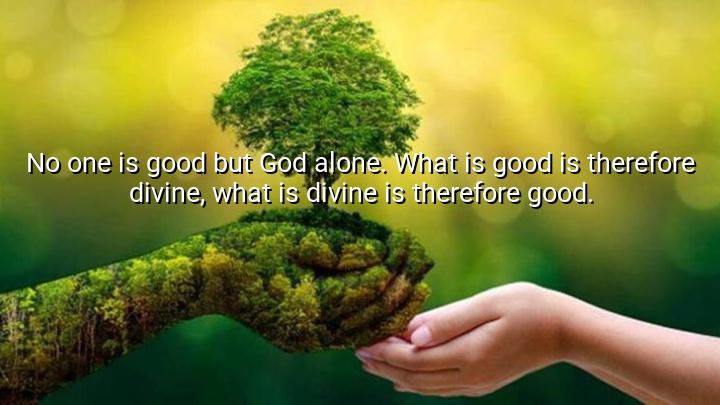




The quote "No one is good but God alone" comes from Saint Ambrose, an influential early Christian bishop and theologian. This statement reflects the Christian belief that true goodness is found only in God. Human beings, regardless of their virtues, are considered fallible and imperfect compared to the divine nature of God. God alone embodies absolute goodness, and everything else derives its goodness through God's influence and creation.
By saying, "What is good is therefore divine," Ambrose emphasizes that goodness is intrinsically linked to the divine. It suggests that anything truly good is a reflection of God's nature, and therefore, goodness cannot exist apart from the divine essence of God. In other words, all that is morally good or virtuous is a manifestation of God's perfect will.
Lastly, "What is divine is therefore good" reinforces the idea that the divine nature of God encompasses all goodness. If something is of God, it must, by definition, be good. This cyclical connection between goodness and the divine underscores the importance of aligning oneself with divine principles to cultivate true goodness in life.

MTDoan Minh Tri
This feels like a quote that could easily be misunderstood or weaponized. If people begin to equate their own beliefs or religious traditions with ‘what is divine,’ could they then claim moral superiority over others? How do we safeguard humility in spiritual discourse when such definitions of good and divine are so absolute?
LNLan Nguyen
Reading this made me wonder how it applies to everyday life. If true goodness is divine, does that mean we should see ordinary acts of goodness—like helping a neighbor or forgiving someone—as small glimpses of the divine? That’s actually a beautiful idea, but it also puts pressure on our intentions. Does an act only count as ‘good’ if done with a spiritual purpose?
DMNguyen Duc Manh
Saint Ambrose seems to be drawing a perfect circle between divinity and goodness, but it raises a question for me—what about evil? If good is divine, is evil merely the absence of God, or something more? I’d love a philosophical or theological take on this, especially how this kind of thinking influences concepts like justice or free will.
PQphuong Quynh
This quote feels very comforting in a way, like it anchors the concept of goodness in something unchanging and eternal. But what happens when religious interpretations of what is ‘divine’ conflict with each other? If different faiths define divine goodness differently, how do we reconcile those differences? Can something be universally good, or is all goodness ultimately subjective?
TLTrieu Ly
I’m struck by how absolute this statement is. It almost makes goodness seem unreachable without God. Does this diminish human agency or moral responsibility? If goodness only belongs to God, where does that leave our ethical choices? I’m genuinely wrestling with the implications—are we instruments of goodness or merely witnesses to it?