

Mental illness doesn't need to be hidden or glorified. It should be normalized to where people feel comfortable sharing with their families and friends and know they're not alone. By opening up about my struggle, I'm hoping I can help someone who feels like they don't know what to do or when they can't accept their situation.
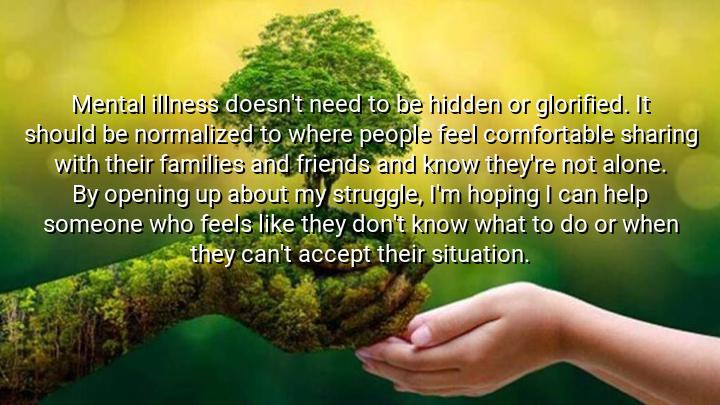




The quote "Mental illness doesn't need to be hidden or glorified. It should be normalized to where people feel comfortable sharing with their families and friends and know they're not alone. By opening up about my struggle, I'm hoping I can help someone who feels like they don't know what to do or when they can't accept their situation." by Ariel Winter highlights the importance of mental health awareness and the need to destigmatize mental illness. Winter advocates for a shift in how society views mental health, urging that it should be treated with the same openness and understanding as physical health. Rather than being hidden or romanticized, mental illness should be normalized so that individuals feel supported and empowered to share their experiences without fear of judgment.
Winter’s statement also emphasizes the role of community and support systems in the healing process. By encouraging individuals to be open with their families and friends, she stresses that talking about mental health struggles can reduce feelings of isolation and foster connection. When people are able to openly discuss their challenges, they realize they are not alone in their experiences, which can be crucial for emotional and psychological well-being.
The quote also highlights Winter’s personal commitment to helping others through her own experiences with mental health. By sharing her own struggles, she hopes to provide guidance and hope to those who might be in a similar situation, particularly those who feel overwhelmed by their mental health challenges or are having difficulty accepting their situation. Winter’s transparency serves as a reminder that sharing personal challenges can be a powerful tool for empowerment and healing.
The origin of this quote comes from Ariel Winter, an American actress best known for her role in Modern Family. Winter has been an outspoken advocate for mental health awareness, particularly in relation to depression, anxiety, and other emotional struggles she has faced. Through her advocacy and openness about her own mental health journey, she has worked to create a space where others feel safe to share their experiences, ultimately helping to normalize conversations about mental illness.

CCChi Chi
This quote raises questions about the ongoing challenges in normalizing mental health. Despite progress, why do many still hesitate to share their experiences with loved ones? How can we break down barriers of shame and misunderstanding? Ariel Winter’s openness is a step forward, but what else needs to happen culturally and institutionally?
TMThu Minh
Ariel’s emphasis on helping those who ‘don’t know what to do’ touches on the confusion and fear surrounding mental illness. What kinds of support systems are most effective for people at that vulnerable stage? How can we improve accessibility to mental health care and education to make this message a reality for more people?
THTu Hoang
Reading this, I’m reminded of the isolation many feel when dealing with mental illness. How might public figures like Ariel Winter influence societal attitudes and encourage others to open up? Could increased visibility of mental health struggles lead to better resources and acceptance? It’s inspiring to see celebrities using their platforms for such important advocacy.
LNLynz Ng
This quote highlights the delicate balance between not hiding mental illness and not glamorizing it. How do we ensure that mental health discussions remain honest and supportive without unintentionally romanticizing suffering? I’m curious about strategies to promote realistic yet compassionate conversations that empower those struggling.
HHHe He
Ariel Winter’s call to normalize mental illness is powerful and much needed. How can families and communities create safe spaces that encourage open conversations about mental health? What role do education and media play in reducing stigma? It’s important to consider how sharing personal struggles publicly can inspire others to seek help and foster a sense of solidarity.