

It is never too late to strengthen the foundation of faith. There is always time. With faith in the Savior, you can repent and plead for forgiveness. There is someone you can forgive. There is someone you can thank. There is someone you can serve and lift. You can do it wherever you are and however alone and deserted you may feel.
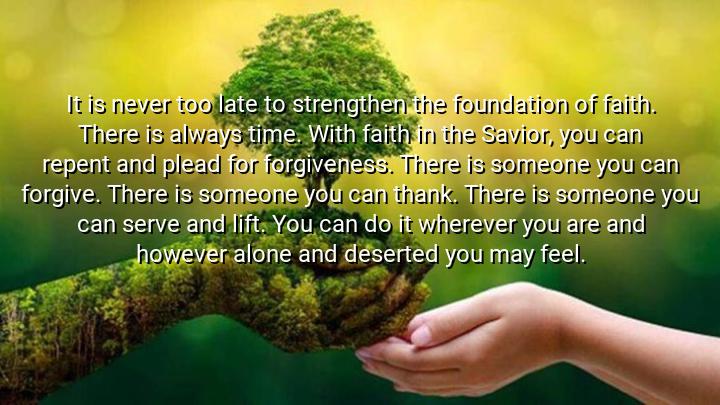




The quote "It is never too late to strengthen the foundation of faith. There is always time. With faith in the Savior, you can repent and plead for forgiveness. There is someone you can forgive. There is someone you can thank. There is someone you can serve and lift. You can do it wherever you are and however alone and deserted you may feel." by Henry B. Eyring speaks to the timeless nature of faith and the redemptive power of the Savior. Eyring emphasizes that no matter where you are in life, it is never too late to strengthen your faith or make changes to align more closely with spiritual values. His message is about hope and opportunity, showing that faith and growth are always accessible, no matter how isolated or discouraged one might feel.
Eyring highlights the transformative power of repentance and forgiveness in the process of strengthening faith. With faith in the Savior, individuals have the chance to repent, seek forgiveness, and heal, allowing them to repair their relationship with God and others. He encourages people to engage in acts of kindness and service, such as forgiving others, offering gratitude, or providing help to those in need, as part of the ongoing process of spiritual growth.
The message also stresses that spiritual growth is not bound by location or circumstances. Even if one feels alone or deserted, the ability to serve and strengthen one’s faith is still possible. Eyring is suggesting that we can always find ways to contribute positively, no matter how isolated we might feel, because spiritual connection and service are available to all, regardless of their situation.
The origin of this quote comes from Henry B. Eyring, a leader in The Church of Jesus Christ of Latter-day Saints. Eyring's teachings often focus on the themes of faith, repentance, and redemption, reflecting his belief in the power of personal growth and spiritual resilience. This quote reflects his encouragement for individuals to recognize their potential for spiritual renewal, regardless of past mistakes or current struggles.

HLHuyen Le
The message feels deeply compassionate, acknowledging loneliness yet offering a path forward. How might communities or faith groups support individuals who feel isolated in their spiritual journey? Does knowing that these actions can be done ‘wherever you are’ help make faith more accessible? It raises important questions about inclusivity and support within religious contexts.
KLKhanh Linh
This quote highlights the relational nature of faith—connecting with the Savior, forgiving others, serving those around us. How does this relational aspect help combat feelings of desertion or abandonment? Can engaging in acts of service and gratitude be a form of self-care? I’d love to discuss practical ways people integrate these principles into daily life.
MKMinh Khang
The idea that it’s never too late to rebuild faith feels empowering. Does this suggest that spiritual growth is a lifelong journey rather than a destination? How do different religious traditions view the timing and process of repentance and forgiveness? I’m curious about the universal aspects of these concepts across cultures.
THDo Thi Thu Ha
This perspective is encouraging but also challenging. It makes me ask, how can someone begin to forgive or serve when they feel utterly alone or abandoned? What steps might help someone open their heart in those moments? It seems like the quote invites both inward reflection and outward outreach as paths to renewal.
TBNguyen Thi Binh
I appreciate how this statement emphasizes action—repenting, forgiving, thanking, serving—as ways to strengthen faith. How do these practices interact with personal growth and healing? Is there a sequence or priority to them, or do they work together simultaneously? I’d like to explore how such spiritual disciplines influence mental health and resilience.