

It is better that some should be unhappy rather than that none should be happy, which would be the case in a general state of equality.
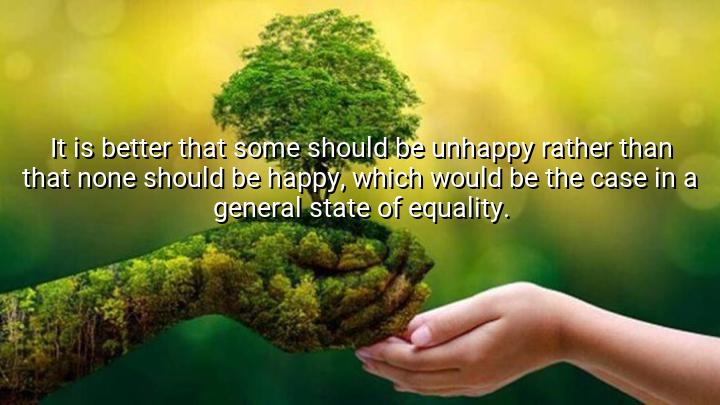




Samuel Johnson’s quote, "It is better that some should be unhappy rather than that none should be happy, which would be the case in a general state of equality," reflects his belief in the complexities of social equality and the potential drawbacks of attempting to achieve perfect equality. Johnson suggests that a society in which everyone is made equal may inadvertently suppress the happiness and well-being of those who might naturally excel or enjoy greater opportunities. In his view, the pursuit of total equality could result in a stagnant society where no one is able to fully thrive.
The quote speaks to Johnson’s broader philosophy about hierarchy and human nature. Johnson was skeptical of utopian ideals and believed that individual differences in talent, ability, and circumstance meant that a strict egalitarian system might lead to greater discontent. Instead of aiming for an ideal where all are equal, he suggested that allowing some people to be more successful or content was preferable to the emptiness of a society where uniformity stifles all potential for happiness.
The origin of the quote can be traced to Johnson’s writings, where he often critiqued the social structures of his time and reflected on the nature of human happiness. A prominent English lexicographer, philosopher, and essayist, Johnson's works frequently discussed moral and social issues, often from a conservative standpoint. In this quote, he is contemplating the risks of pursuing an unrealistic vision of perfect equality at the expense of allowing individuals to flourish in different ways.
Ultimately, Johnson’s statement is a cautionary reflection on the possible downsides of a society obsessed with equality at the cost of individual freedom and opportunity. He suggests that a balance must be struck between ensuring the well-being of all and allowing for the natural disparities that can lead to happiness and progress for some, even if it means some are left dissatisfied.

AAdministratorAdministrator
Welcome, honored guests. Please leave a comment, we will respond soon