

Integrity without knowledge is weak and useless, and knowledge without integrity is dangerous and dreadful.
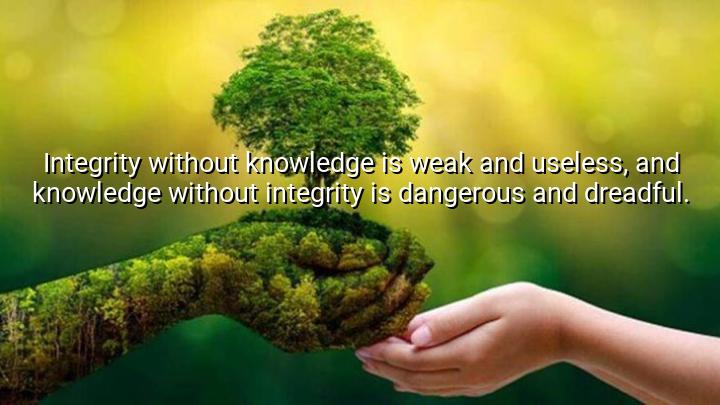




The quote, “Integrity without knowledge is weak and useless, and knowledge without integrity is dangerous and dreadful,” is attributed to Samuel Johnson, the 18th-century English writer, moralist, and lexicographer. Johnson was deeply concerned with the relationship between morality and intellect, and this statement reflects his conviction that true greatness requires the union of both. It highlights the dangers of imbalance—when either integrity or knowledge stands alone without the other.
The first part, “integrity without knowledge is weak and useless,” suggests that while integrity—honesty, morality, and strong principles—is admirable, it cannot achieve much without the guidance of knowledge. Good intentions alone are not sufficient to address complex problems or bring about meaningful change. Without wisdom or understanding, integrity may lack the power to make a real impact.
The second part, “knowledge without integrity is dangerous and dreadful,” warns of the greater threat: intellectual ability or expertise misused without ethical grounding. Knowledge in the wrong hands can be manipulated for selfish, harmful, or destructive purposes. Johnson underscores that when intelligence is divorced from morality, it becomes not a tool for progress but a weapon that endangers others.
Ultimately, Johnson’s words remind us of the necessity of balance between character and intellect. He insists that neither quality alone is enough; together, they form the foundation of true wisdom and responsible action. This insight remains timeless, urging us to cultivate both knowledge and integrity in equal measure to build lives—and societies—of strength, justice, and safety.

AAdministratorAdministrator
Welcome, honored guests. Please leave a comment, we will respond soon