

Leisure and curiosity might soon make great advances in useful knowledge, were they not diverted by minute emulation and laborious trifles.
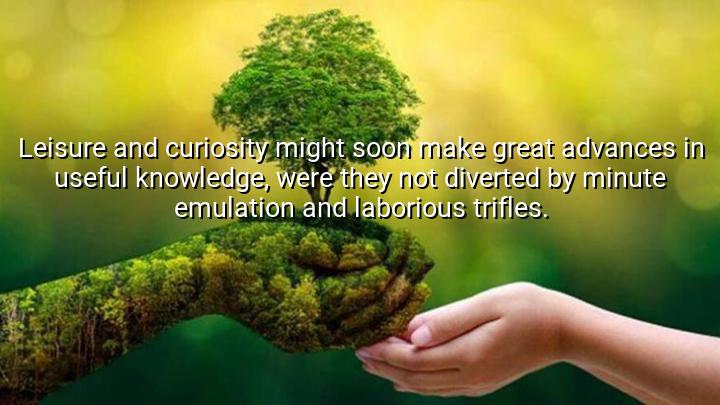




The quote by Samuel Johnson reflects his concern about how leisure and curiosity, two essential drivers of human progress, are often wasted on trivial pursuits. Johnson suggests that when people have the time and desire to explore knowledge, they have the potential to make “great advances” in useful knowledge—knowledge that can benefit society as a whole. However, he laments that this potential is frequently derailed by “minute emulation” (petty competition) and “laborious trifles” (time-consuming but unimportant details).
The meaning here is a critique of human behavior and intellectual culture. Instead of directing their curiosity toward discoveries and advancements that truly matter, people often get caught up in showing off, competing for recognition, or obsessing over small, insignificant matters. Johnson implies that this misdirection of effort prevents society from achieving more meaningful progress in science, philosophy, and practical knowledge.
The origin of this perspective comes from the 18th century Enlightenment, an era in which Johnson lived. During this period, there was great interest in reason, inquiry, and learning, but Johnson often warned about the dangers of wasted intellect. His writings, including The Rambler and The Idler, frequently dealt with themes of how individuals spend their time and the importance of directing energy toward pursuits of real value. This quote reflects his lifelong concern that human potential is often squandered through distraction and vanity.
In essence, Johnson’s observation remains timeless. It warns that while leisure and curiosity can lead to innovation and wisdom, they can just as easily be wasted on pursuits that serve neither personal growth nor collective progress. His insight challenges us to be mindful of where we direct our intellectual energy—choosing substance over triviality.

AAdministratorAdministrator
Welcome, honored guests. Please leave a comment, we will respond soon