

Coming generations will learn equality from poverty, and love from woes.
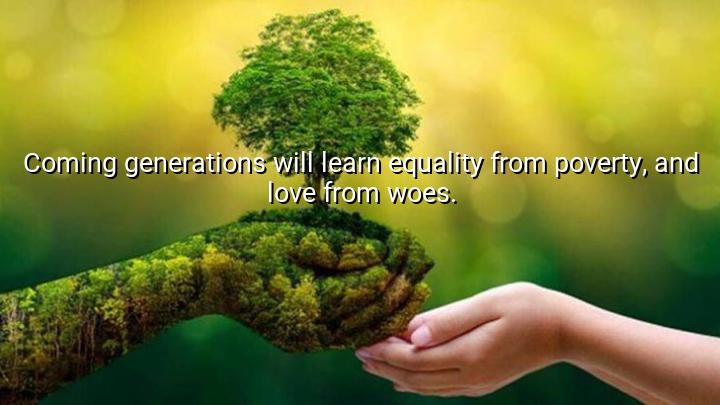




In this quote, Khalil Gibran suggests that future generations will come to understand equality and love through experiences of hardship and suffering. He implies that when people face poverty and personal struggles, they may gain a deeper understanding of what it means to be equal, as they experience life without the privilege of wealth or social status. The shared experience of poverty can foster empathy and solidarity, teaching people that in the face of adversity, all human beings are equal in their vulnerability.
Gibran also suggests that love is learned through woes, meaning that difficult emotional experiences—such as loss, pain, or hardship—can cultivate a deeper, more profound sense of love. Through suffering, individuals often gain a greater appreciation for the human condition and the need for compassion. The difficulties that people endure can encourage them to connect with others on a more empathetic and loving level, as they recognize the universal nature of struggle and the importance of supporting one another.
This quote reflects Gibran's broader philosophy about the relationship between suffering and personal growth. He often explored how pain and sorrow are integral to understanding the complexities of life and the human soul. According to Gibran, it is through these difficult experiences that we come to grasp the deeper truths about love and equality, not through comfort or privilege.
Ultimately, Gibran’s quote serves as a reminder that hardship has the potential to teach us the most valuable lessons in life. Poverty and woes, while painful, can shape a generation's understanding of what it means to be truly equal and capable of love, transcending superficial divides and leading to a more compassionate society.

AAdministratorAdministrator
Welcome, honored guests. Please leave a comment, we will respond soon