

Sadness is but a wall between two gardens.
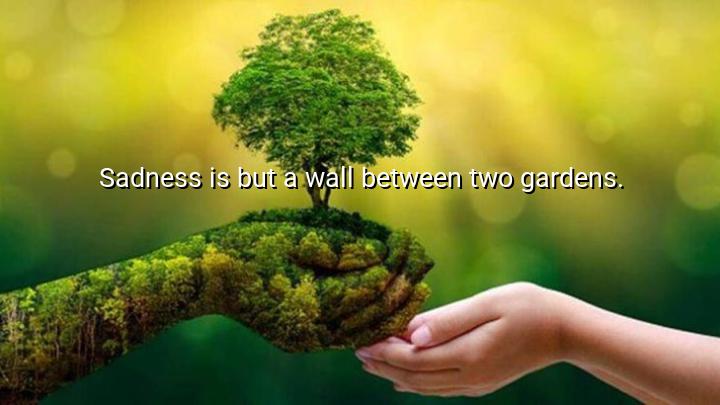




In this quote, Khalil Gibran uses the metaphor of a wall between two gardens to explore the transient nature of sadness. He suggests that sadness is not a permanent state, but rather a temporary barrier separating two states of emotional well-being. The image of gardens evokes growth, peace, and life, while the wall represents the obstacles or challenges that prevent us from fully experiencing joy. Gibran implies that, like a wall, sadness can block us from moving freely between happiness and sorrow, but it is not an insurmountable force—it can be overcome.
The origin of the quote is tied to Gibran’s broader philosophical and spiritual views, particularly those expressed in his renowned work, The Prophet. Known for his poetic reflections on human emotion, love, and pain, Gibran often viewed suffering as a natural and necessary part of the human experience, one that ultimately leads to growth and understanding. In this context, the quote suggests that sadness is just one phase in an ongoing journey of emotional transformation, and it has a role to play in helping us appreciate the fullness of life.
Gibran’s use of the garden imagery is significant because gardens represent both nourishment and renewal. Just as a garden needs time to grow and flourish, so too do our emotional states require time to heal. The wall, therefore, symbolizes an obstacle that, while it may seem daunting, does not permanently imprison us. It serves as a passage—once we navigate it, we can return to the joy and vitality that lie just beyond it.
Ultimately, Gibran’s quote reminds us that sadness is a temporary emotional state that, while it can feel isolating, is not an end in itself. The wall between the two gardens suggests that there is always the potential for renewal and growth, and that beyond our sorrow lies a return to emotional balance and joy. The quote encourages a sense of hope, suggesting that sadness, like all emotions, is a part of a larger, evolving emotional landscape.

AAdministratorAdministrator
Welcome, honored guests. Please leave a comment, we will respond soon