

I have a dream that my four little children will one day live in a nation where they will not be judged by the color of their skin, but by the content of their character.
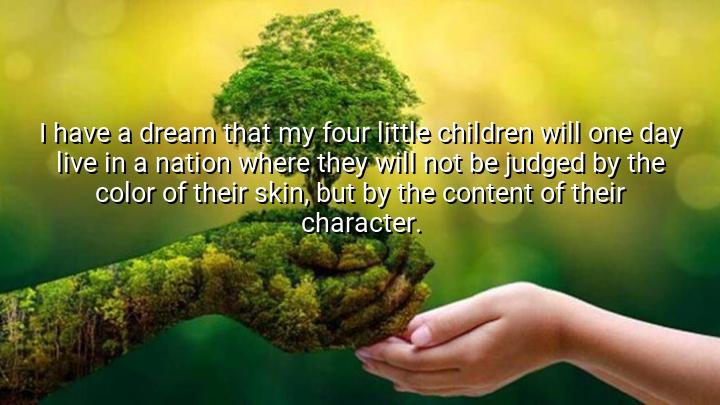




In this iconic quote, Martin Luther King Jr. expresses his vision for a future where racial judgment and discrimination no longer shape the lives of individuals. He imagines a world where his four little children—and, by extension, all people—will be evaluated based on their character and personal qualities, rather than the color of their skin. This vision is central to his advocacy for racial equality and justice, calling for a society where people are judged by their actions, values, and integrity rather than their race or ethnicity.
King’s reference to the color of their skin speaks to the pervasive and harmful effects of racial prejudice that were widespread in American society, especially during the era of segregation and the civil rights movement. The idea that individuals should be judged by the content of their character instead is a call for colorblindness in how society evaluates people, urging a shift away from racial categorization and discrimination toward a focus on moral and ethical qualities.
The quote is rooted in King’s belief in nonviolence and equality, both of which were foundational to his work as a civil rights leader. His dream was not just a personal hope for his children but a broader vision for an entire nation, where the values of justice, freedom, and equality would define relationships and opportunities rather than racial or ethnic backgrounds.
Ultimately, this quote from King’s famous "I Have a Dream" speech encapsulates his dream of a world where the barriers of racial prejudice are eliminated, and where people of all races can coexist and thrive on the basis of their shared humanity and the strength of their individual character.

AAdministratorAdministrator
Welcome, honored guests. Please leave a comment, we will respond soon