

Property is intended to serve life, and no matter how much we surround it with rights and respect, it has no personal being. It is part of the earth man walks on. It is not man.
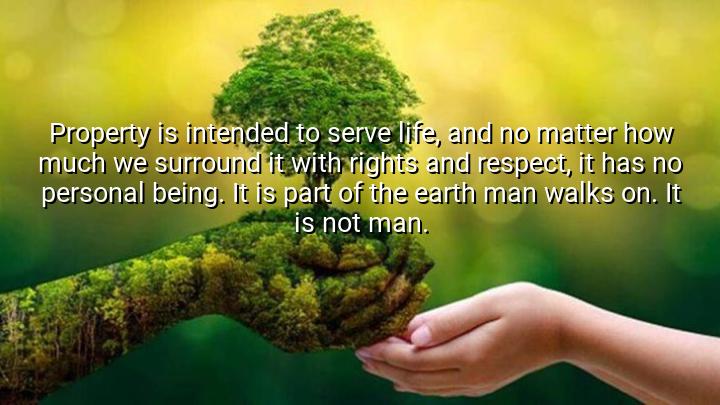




The quote by Martin Luther King, Jr. emphasizes the distinction between property and human life. By stating, “Property is intended to serve life, and no matter how much we surround it with rights and respect, it has no personal being,” King highlights that material possessions, while legally protected, do not possess intrinsic human value. Property exists to support and enhance human existence, but it is not equivalent to the worth or dignity of people themselves.
King’s words suggest that society often elevates property above human needs, yet true ethical and moral judgment should prioritize life, justice, and human dignity. While laws and social structures grant rights to property, it remains fundamentally a tool or resource, part of the natural world, rather than an entity capable of experiencing or embodying the fullness of human existence.
The origin of this quote comes from Martin Luther King, Jr., an American civil rights leader and advocate for social justice. Throughout his work, King frequently addressed the moral responsibilities associated with wealth, ownership, and social resources, emphasizing that economic and material considerations must never overshadow the value of human life. His reflections link ethical leadership and social progress to the prioritization of people over possessions.
Ultimately, the quote serves as a reminder that property is secondary to the sanctity of life. By viewing material wealth and ownership as tools to support human flourishing, rather than ends in themselves, society can foster a more just, compassionate, and equitable world. Respect for life must always take precedence over respect for property.

AAdministratorAdministrator
Welcome, honored guests. Please leave a comment, we will respond soon