

If we are not free, no one will respect us.
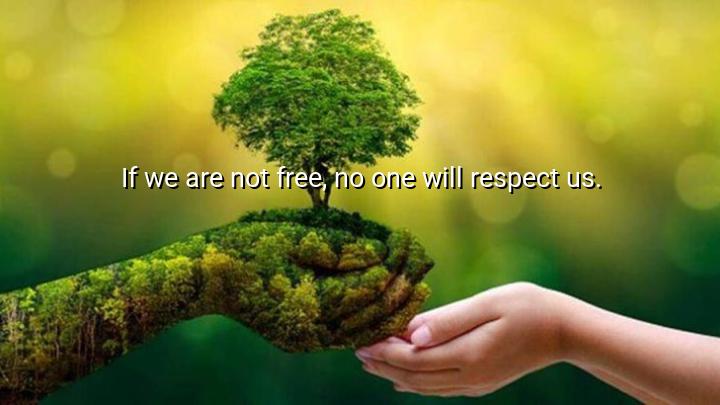




The quote "If we are not free, no one will respect us" by A. P. J. Abdul Kalam underscores the intrinsic connection between freedom and dignity. Kalam suggests that true respect, whether from others or from society at large, is impossible without personal or collective liberty. Without the ability to make choices, express opinions, or live according to one’s values, individuals and nations cannot command genuine esteem or recognition.
This quote reflects Kalam’s deep commitment to national development, empowerment, and self-reliance. As a scientist, educator, and former President of India, he consistently emphasized that freedom is not just political or legal but also intellectual and social. Respect from others, he argued, is earned not through fear or compliance, but through the assertion of one’s rights and the pursuit of autonomy.
The origin of this quote is rooted in Kalam’s vision for India as a sovereign, progressive, and self-respecting nation. Having witnessed the struggles of post-independence India and understanding the importance of individual empowerment, he often highlighted that freedom is foundational to achieving respect, dignity, and meaningful participation in society.
In essence, Kalam is reminding us that freedom is a prerequisite for respect. Whether at the level of an individual or a nation, the capacity to act independently and uphold one’s values ensures that others recognize and honor one’s worth, reinforcing the inseparable bond between liberty and dignity.

AAdministratorAdministrator
Welcome, honored guests. Please leave a comment, we will respond soon