

Equity' is only two letters away from 'equality,' after all, and who would object to that? But in those two letters is a world of difference. 'Equity' is intrinsically unjust because it demands equality of outcome and not equality of opportunity.
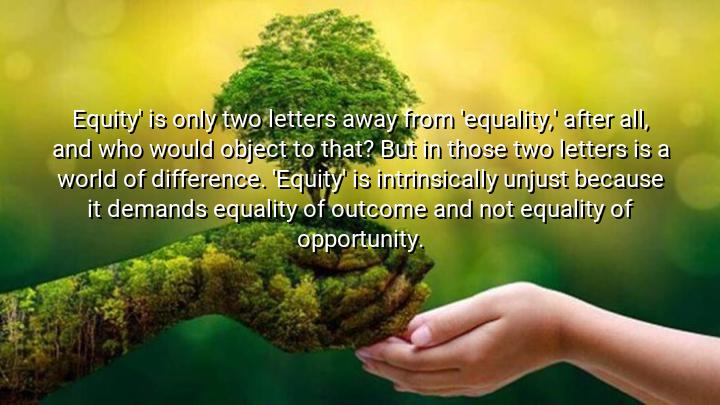




Miranda Devine’s statement, “Equity' is only two letters away from 'equality,' after all, and who would object to that? But in those two letters is a world of difference. 'Equity' is intrinsically unjust because it demands equality of outcome and not equality of opportunity,” critiques the concept of equity in social and policy contexts. She distinguishes equity from equality, arguing that while equality of opportunity ensures everyone has a fair chance, equity, in her view, imposes equality of outcome, which she sees as unfair and potentially unjust.
The quote underscores the philosophical and practical tension between equality and equity. Devine contends that striving for identical outcomes regardless of individual effort or circumstances can undermine merit, personal responsibility, and fairness. She frames equity as a concept that can inadvertently disadvantage those who work hard while attempting to artificially level results.
The origin of this remark lies in Devine’s career as an Australian journalist and commentator, known for her conservative and often provocative views on social policy and culture. Her critiques often focus on the implications of progressive policies related to education, social justice, and economic fairness, emphasizing individual responsibility and skepticism toward interventions that prioritize equal results over equal chances.
At its core, the quote reflects Devine’s belief that fairness is best achieved through equality of opportunity rather than enforced equity of outcome. She uses the linguistic closeness of the terms equity and equality to highlight how subtle conceptual differences carry significant philosophical weight, encouraging readers to carefully consider how policies intended to promote fairness are designed and implemented.
Would you like me to also explain how this perspective aligns with broader debates on equity versus equality in education and employment policies?

AAdministratorAdministrator
Welcome, honored guests. Please leave a comment, we will respond soon