

I'm very open and honest, and I feel like it's important for women to hear that we're not perfect; none of us are perfect. And sometimes we aspire to have these ideas in our heads of what perfection is, and I probably would've been better off if I'd left myself alone.
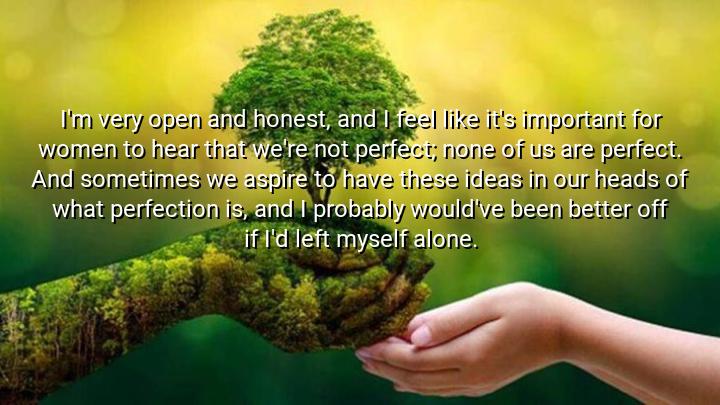




The quote "I'm very open and honest, and I feel like it's important for women to hear that we're not perfect; none of us are perfect. And sometimes we aspire to have these ideas in our heads of what perfection is, and I probably would've been better off if I'd left myself alone." by Adrienne Bailon reflects her belief in the importance of self-acceptance and authenticity. Bailon is encouraging women to let go of the unrealistic standards of perfection that society often imposes and to embrace the idea that nobody is perfect. She acknowledges that striving for perfection can create unnecessary stress and dissatisfaction, and instead, we should focus on self-compassion and honesty.
Bailon emphasizes that no one, including herself, is immune to the pressures of wanting to meet idealized standards. These aspirations of perfection can often cloud our judgment and cause us to be self-critical, hindering our ability to appreciate our true selves. Her statement suggests that accepting our imperfections is not only a healthier mindset but also a more realistic approach to personal growth and well-being.
In the latter part of the quote, Bailon reflects on her own experiences and admits that she might have been better off if she had let herself be and not tried so hard to fit into a mold of perfection. This is a call to embrace imperfections and to not get caught up in the pressure to always look or act in a certain way. It highlights the value of self-acceptance over striving for an unattainable ideal.
The origin of this quote comes from Adrienne Bailon, a singer, actress, and television personality known for being a part of the group The Cheetah Girls and later hosting TV shows like The Real. Throughout her career, Bailon has been open about her personal struggles with self-esteem and body image, using her platform to promote more honest and realistic representations of women in the public eye. This quote reflects her ongoing commitment to being transparent about the importance of accepting imperfections and being true to oneself.

TTho
This statement made me think about the pressure women face to constantly improve or fix themselves. How do we balance ambition and self-acceptance? Can embracing imperfection actually lead to greater happiness and productivity? I’m curious about strategies people use to resist the perfectionism trap and cultivate self-love.
VANguyen Viet Anh
Adrienne Bailon’s admission feels vulnerable and empowering at once. How can public figures use their platforms to normalize imperfection and reduce stigma around struggles? Could more openness about flaws help break down unrealistic beauty and success standards? It’s interesting to think about the impact of honesty in fostering collective well-being.
PDPhuong Dung
I appreciate the encouragement for women to hear that imperfection is normal. But I wonder, are there differences in how this message is received across generations or cultures? What role do media and social platforms play in shaping or challenging these ideas of perfection? This could lead to a fascinating conversation about representation and mental health.
DPVo Ngoc Dan Phuong
This quote highlights the internal struggle many face with unrealistic ideals. Does striving for perfection hinder personal growth or creativity? How do we learn to ‘leave ourselves alone’ and accept our flaws? It raises questions about self-compassion and how to develop healthier relationships with our own expectations.
NNNhi Nguyen
Adrienne Bailon’s honesty about imperfection is refreshing and important. It makes me wonder how much societal pressures on women to be ‘perfect’ affect mental health and self-esteem. How can we shift cultural narratives to embrace vulnerability and authenticity? I’d love to hear ideas on how individuals and communities can support this more realistic and compassionate view of ourselves.