

I'm creating art that can be healing. Art that can make you feel like you're not alone, like you're not an outsider. Art that is useful.
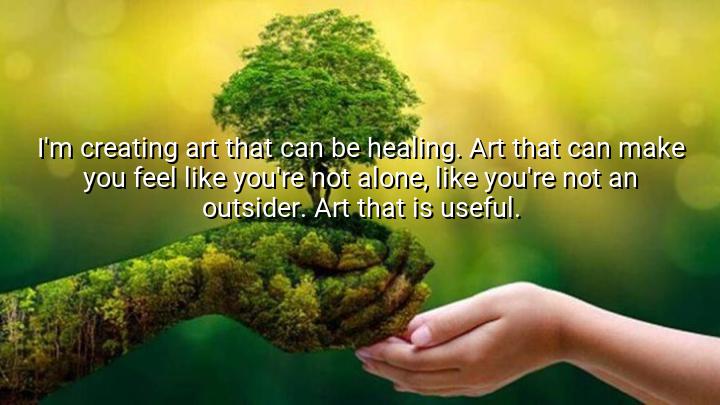




The quote "I'm creating art that can be healing. Art that can make you feel like you're not alone, like you're not an outsider. Art that is useful." by Jamila Woods speaks to the transformative power of art and its ability to provide comfort and connection. Woods expresses her intention to create art that not only has aesthetic value but also serves a deeper, more healing purpose. Her work aims to reach people who may feel isolated, offering them a sense of belonging and the reassurance that they are not alone in their experiences or struggles.
Woods emphasizes the role of art as a tool for emotional healing and empowerment. She believes that art has the potential to provide solace to individuals who may feel like outsiders, whether due to their identity, experiences, or social circumstances. The idea of creating "useful" art suggests that art should have a practical impact—one that goes beyond visual appeal and extends to emotional and psychological well-being.
By describing her work as healing, Woods also highlights the therapeutic aspects of creative expression. Art can offer a form of catharsis, allowing people to process emotions, confront their struggles, and find understanding in the stories or messages shared through artistic mediums. For Woods, creating art that resonates with people on a personal level can foster a sense of solidarity and support, making individuals feel seen and understood.
The origin of this quote comes from Jamila Woods, an American singer, songwriter, and poet known for her work in music that blends elements of soul, R&B, and hip-hop. Woods is an artist who often explores themes of identity, community, and social justice in her work. Her commitment to creating art that serves a greater purpose reflects her belief in the power of music and creativity to bring about change and healing. This quote encapsulates her desire to make art that is both meaningful and impactful for her audience.

TLThat Le
Jamila Woods suggests art has a communal purpose—to counter loneliness and alienation. How can institutions like schools, galleries, or media support this vision? Could integrating healing art into everyday life improve collective mental health? What examples exist of art projects successfully fostering inclusion and emotional support?
ATAnh Tuyet
This quote makes me wonder how artists navigate the responsibility of creating healing art. Is there pressure to address social issues or mental health themes? How can art avoid becoming didactic while still offering solace? What role does authenticity play in making art that truly resonates and feels useful?
ANAn Nguyen
Woods’ words invite reflection on what makes art meaningful. Is ‘usefulness’ in art tied to its emotional impact, social commentary, or practical application? How do you personally define art’s utility? Could prioritizing healing and connection over commercial success change the way art is produced and consumed?
QADang quoc anh
I’m struck by the idea that art can make us feel less like outsiders. How does vulnerability in artistic expression invite others to relate and heal? Can this process transform both the artist and the audience? What challenges might artists face in balancing personal expression with the goal of helping others feel seen and understood?
NTNhat Nga Nguyen Thi
This quote highlights art’s role beyond aesthetics—serving as a bridge to connection. What kinds of art do you find most healing or inclusive? How might communities leverage art to address feelings of alienation or marginalization? Could more intentional creation of ‘useful’ art foster empathy and understanding in society?