

If you use that time where you're alone in ways that bring you joy and peace, then that solitude can have a really positive effect on your life.
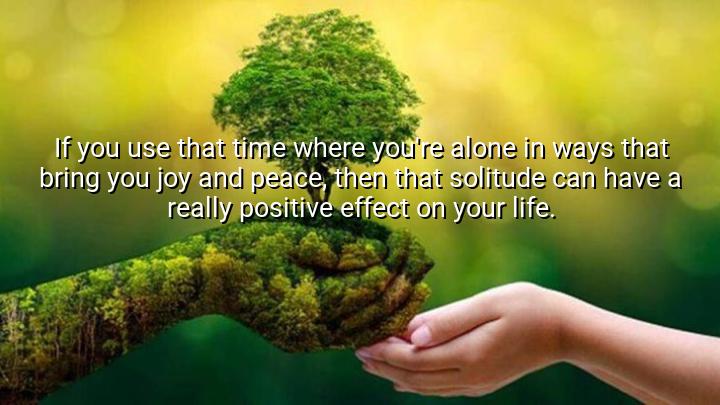




In this quote, Vivek Murthy, a former U.S. Surgeon General, speaks to the potential benefits of solitude when it is used purposefully. He suggests that rather than viewing being alone as something negative or isolating, it can be a time for personal growth and emotional well-being if used in ways that bring joy and peace. Murthy emphasizes that the quality of time spent alone, and how it is spent, plays a crucial role in how it impacts one's life.
Murthy highlights the idea that solitude doesn't have to be a source of loneliness or discontent. Instead, when one engages in activities that are personally fulfilling—such as hobbies, reflection, or relaxation—solitude can lead to a sense of calm, mental clarity, and emotional balance. This kind of self-reflection and personal time can be restorative, helping individuals to feel more centered and in tune with themselves.
The quote also implies that solitude can provide an opportunity for self-discovery and personal development. By spending time alone in a positive way, individuals can connect with their inner desires, passions, and needs. Murthy encourages individuals to embrace this time for self-care and reflection, which can ultimately enhance one's overall health and happiness.
Ultimately, Murthy’s statement encourages us to reframe how we view time spent alone. Rather than seeing solitude as a negative or isolating experience, he advocates for using it in ways that foster personal growth, joy, and peace. The positive effects of solitude can be profound when used thoughtfully, providing the space to recharge, reflect, and engage in activities that nourish both the mind and the soul.

HCNguyen Ha Chi
What I appreciate about this quote is its gentle encouragement, but I can’t help but ask—how do people in difficult emotional states use solitude effectively? When you're grieving, depressed, or anxious, being alone can sometimes make things worse. So how do we transform solitude into something positive in those moments, instead of letting it magnify pain? I'd love to explore strategies for turning alone time into healing space.
TQTran Thuc Quyen
This makes me reflect on how I spend my quiet moments. Do we underestimate how powerful intentional solitude can be? We often treat being alone like a problem to solve rather than a chance to reflect or reset. I'm wondering if there should be more emphasis on this in schools or workplaces—like teaching people how to enjoy their own company instead of constantly pushing social interaction.
PNPham ngan
I totally agree with the sentiment here, but I’m curious—can solitude still be fulfilling for extroverts who naturally crave connection? Or is this quote more aligned with an introvert’s experience? I’d love to hear from people who have learned to embrace alone time even if it doesn’t come naturally. Is it a skill we can all learn, or does personality type define the experience?
TNTram Nguyen
I think this quote is beautiful, but it makes me wonder about the difference between solitude and loneliness. At what point does being alone stop being restorative and start becoming isolating? How do we recognize that line in ourselves? Especially in a world where we’re so connected digitally, it’s interesting how true solitude can feel unfamiliar—maybe even scary—for some people.
MDNguyen Minh Dat
This quote resonates with me, but it also raises a question: what if someone doesn’t know what brings them joy and peace yet? Solitude can feel heavy when you're still figuring yourself out. Should people first focus on self-discovery before trying to transform their alone time into something positive? I wonder how many people struggle to be alone simply because they haven't yet learned how to be with themselves.