

I would say, 'I'm alone, but I'm not lonely.' But I was just kidding myself.
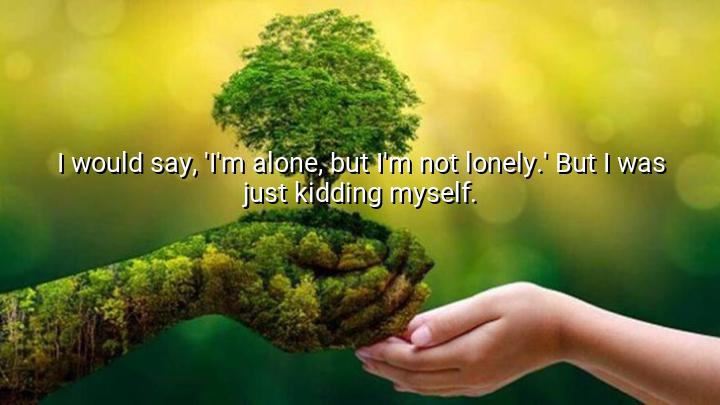




In this quote, Bruce Willis reflects on the complex emotions surrounding solitude and loneliness. He initially tries to convince himself that while he is alone, he is not lonely, suggesting that he might have found comfort or peace in being by himself. However, he admits that he was kidding himself, implying that despite his attempts to rationalize his situation, he was still grappling with the deeper feeling of loneliness. This reveals a moment of self-awareness where he recognizes the difference between being physically alone and experiencing emotional isolation.
Willis's statement speaks to the universal human experience of solitude and the struggle many face when trying to reconcile being alone with the fear or discomfort of loneliness. While one can be alone and at peace, it’s also possible to feel the absence of connection or companionship, which is the essence of loneliness. The distinction between the two is often subtle, and sometimes, people try to mask their feelings of loneliness by convincing themselves they are fine with being alone.
The quote also highlights the tension between self-deception and self-acceptance. Willis initially tries to comfort himself by dismissing the feelings of loneliness, only to later acknowledge that doing so was a way of avoiding the deeper emotional truth. His vulnerability in admitting this makes the quote relatable to anyone who has struggled with accepting the reality of their emotions, especially when it comes to solitude and the need for human connection.
Ultimately, Willis’s quote is an honest reflection on the complexity of human emotions and the difficulty of facing loneliness. It encourages a deeper understanding of how we sometimes try to convince ourselves of something that isn't entirely true in order to cope with feelings of isolation. It also highlights the importance of acknowledging loneliness in order to address and eventually overcome it.

TMDang Thao Mi
Is it possible to be truly alone and content, or is that just a myth we tell ourselves? I used to believe I didn’t need anyone, but now I’m not so sure. Maybe we all have that moment when we realize we’re not fooling ourselves anymore. I’m curious how others make peace with solitude—do you embrace it, or does it eventually start to feel like a burden?
TCLe Thi Thuy Chinh
I feel like this quote could resonate with anyone who’s gone through a major life change—like divorce, retirement, or losing a close friend. Sometimes we cling to the idea that we're strong on our own because admitting the truth feels too painful. But what’s the cost of denying loneliness? Is it better to acknowledge it and risk vulnerability, or to suppress it and risk emotional numbness?
THnguyen thuy ha
There’s something really honest and raw about this quote. It makes me think about how self-deception can be both a coping mechanism and a trap. I wonder how long someone can sustain the illusion before it starts to break them down. What’s the tipping point where pretending no longer works? And when that happens, where do you turn—especially if you've convinced others you're fine, too?
DDHoang Dan Do
This makes me reflect on how I sometimes distract myself with work or hobbies just to avoid confronting feelings of loneliness. Do we use independence as a shield? Is saying 'I'm not lonely' a way of protecting our ego? It’s such a sobering thought that someone as accomplished as Bruce Willis could feel that way. Maybe we all need to examine whether we're really okay—or just pretending to be.
UGUser Google
I appreciate the vulnerability in this. It reminds me that even people who seem strong or self-assured can feel deeply isolated. Why is it so hard to admit we’re lonely, especially for men or public figures? There's such a stigma around loneliness, like it’s a weakness, when it's actually a deeply human experience. Shouldn’t we normalize talking about it more openly before it eats away at us?