

I hope not in works. I hope not in ethics. I hope not in baptisms or church membership. I hope in Christ alone.
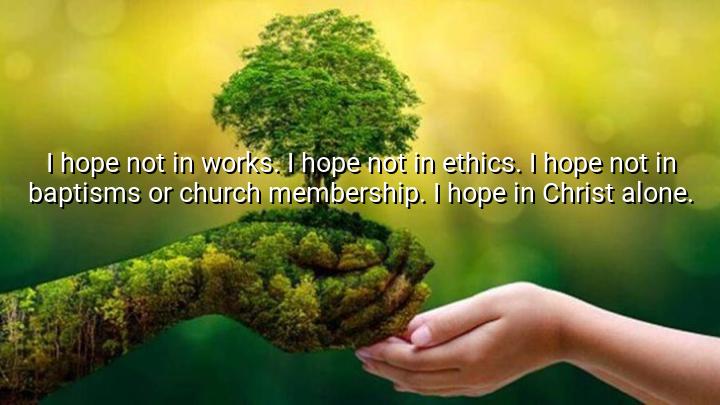




The quote, "I hope not in works. I hope not in ethics. I hope not in baptisms or church membership. I hope in Christ alone," is from Paul Washer, an American Christian evangelist and preacher known for his passionate and often direct teachings. In this statement, Washer emphasizes the Christian concept of salvation and the centrality of faith in Christ as the only true foundation for hope and redemption, rather than relying on human actions or religious rituals.
Washer's words critique the idea that salvation can be earned through human effort, such as good works, adherence to moral ethics, or religious practices like baptism and church membership. While these actions may be important in religious life, Washer argues that they cannot save a person. For him, true hope lies not in what a person does, but in the grace and sacrifice of Christ alone, underscoring the Christian belief that faith in Christ is the sole means of salvation.
The phrase "I hope in Christ alone" points to the core of Washer’s theological belief: Christ's atoning work on the cross is the only source of forgiveness and eternal life. It highlights a key tenet of Christian faith—that salvation is a gift of grace from God, received through faith in Jesus Christ, rather than a result of personal merit or ritual observance. This positions Christ as the central figure in the believer's spiritual journey and the foundation of their hope.
Ultimately, Washer’s statement serves as a powerful reminder of the Christian conviction that salvation is based on faith in Christ and not on external actions. It calls believers to focus on their personal relationship with Christ rather than placing their trust in works or rituals. His emphasis on Christ alone reinforces the idea of divine grace as the only true path to redemption.

QBQuynh Bich
This quote invites reflection on the core of religious belief. Does focusing solely on Christ risk isolating faith from lived experience and communal expressions like baptism and ethics? Or is it a powerful statement against relying on human effort for salvation? I’d love to explore how this tension between faith and works shapes modern Christian identity and practice, especially in diverse cultural contexts.
UGUser Google
Reading this, I question whether this exclusive hope in Christ alone might be misunderstood as dismissing the transformative power of good works and community. Is Washer’s intention to protect faith from being reduced to mere actions, or to warn against legalism? How can believers balance the tension between faith as trust and faith expressed through ethical conduct and church participation?
HPha phuong
This declaration seems to emphasize a theology of grace over deeds. How do believers reconcile this with biblical teachings that stress the importance of ethical living and baptism? Is Washer suggesting that these practices have no value at all, or that their value is secondary? I’m curious about how this view impacts the way faith communities approach discipleship and accountability.
BGBe Gau
I find this statement both comforting and provocative. Does placing hope exclusively in Christ exclude the meaningful role of rituals and ethics in spiritual life, or does it serve as a necessary reminder to avoid superficial religiosity? I’d like to hear thoughts on whether this perspective encourages deeper faith or potentially fosters division among different Christian traditions that emphasize works or sacraments.
QMQuang Mom
This quote raises an intense and personal perspective on faith. I wonder if Washer’s emphasis on hoping solely in Christ is meant to challenge traditional religious practices or simply refocus believers on the core of their faith. How might this stance affect one’s view of good works or community involvement? Could it risk undervaluing important ethical behavior, or is it a call to ensure that such actions flow naturally from genuine belief?