

I have always preferred to keep things to myself rather than sharing them with anyone, but I am learning that if you let it go, you feel better for it. Don't keep it all bottled up inside; don't take it all on alone.
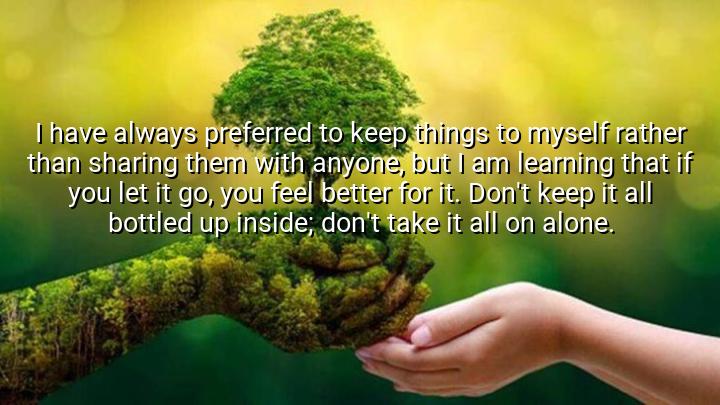




The quote "I have always preferred to keep things to myself rather than sharing them with anyone, but I am learning that if you let it go, you feel better for it. Don't keep it all bottled up inside; don't take it all on alone." by Luis Suarez reflects a personal realization about the importance of sharing emotions and experiences rather than keeping them bottled up inside. Suarez acknowledges that he has traditionally been someone who prefers to handle challenges privately, but he is now learning that opening up and letting go of internalized emotions can bring relief and improve mental well-being.
Suarez's words highlight the emotional burden of keeping one's thoughts and feelings to oneself. The phrase "don't keep it all bottled up inside" emphasizes how suppressed emotions can lead to unnecessary stress and mental strain. By sharing one's struggles, whether with friends, family, or a support system, it becomes possible to release some of that tension, fostering a sense of emotional freedom and connection.
The quote also speaks to the importance of vulnerability in relationships and personal growth. Suarez suggests that learning to share and not handle everything alone is a key step toward emotional healing. It implies that openness and communication with others are essential for maintaining healthy mental health and can help individuals feel less isolated in their struggles.
The origin of this quote comes from Luis Suarez, a professional footballer known for his career in top European clubs like Barcelona and Liverpool. Suarez has been public about his personal challenges and growth, and this quote reveals his evolving understanding of emotional and mental health. It reflects his efforts to improve his emotional well-being and overcome personal difficulties by learning to share rather than carry burdens in isolation.

TPThanh Pham
This quote inspires reflection on the process of emotional growth. It’s never easy to change long-held habits, especially about vulnerability. How long might it take for someone to feel comfortable sharing after years of silence? And what role does forgiveness—both of oneself and others—play in releasing bottled-up feelings?
VHNguyen Van Huong
I find the idea of ‘not taking it all on alone’ compelling because it challenges the ‘strong individual’ stereotype. How does societal expectation of strength affect people’s willingness to share struggles? Could changing these narratives help reduce stigma around seeking help? I wonder how public figures sharing their experiences might influence this shift.
DNHai dang Nguyen
Reading this makes me think about the role of support systems in mental health. How critical is having someone to talk to in processing emotions and stress? Could this learning to ‘let it go’ be seen as a form of self-care? What advice would you give to someone who is used to facing challenges alone but wants to try sharing more?
HLHoang Le
This statement highlights the heavy burden of carrying emotions alone. I’m curious, though—what kinds of things are hardest to share, and why? Are there particular relationships or situations that make sharing easier or more difficult? It would be interesting to explore strategies for creating safe spaces where people feel comfortable opening up.
STspiral tv
I appreciate this honest reflection about learning to let go. It raises an important question: why do many of us feel compelled to bottle things up in the first place? Is it due to mistrust, fear of judgment, or simply habit? Also, how can someone start the difficult process of sharing without feeling overwhelmed or exposed?