

Happiness must be cultivated. It is like character. It is not a thing to be safely let alone for a moment, or it will run to weeds.
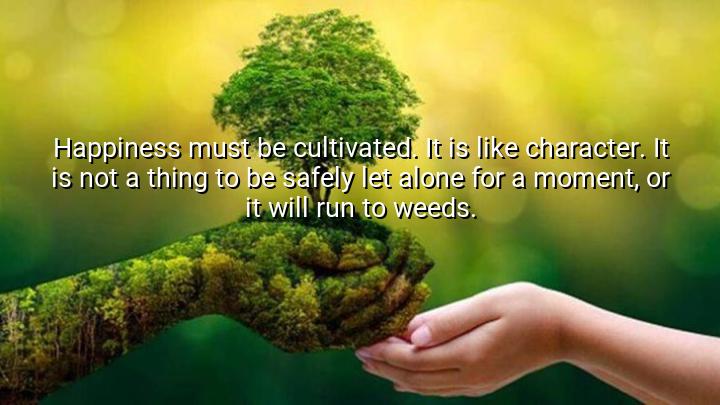




The quote "Happiness must be cultivated. It is like character. It is not a thing to be safely let alone for a moment, or it will run to weeds" is from Elizabeth Stuart Phelps, an American author and social activist. In this statement, Phelps compares happiness to character, suggesting that both require continuous effort and attention to thrive. Just as character cannot be left unchecked or unrefined, happiness needs to be actively nurtured to prevent it from fading or deteriorating.
Phelps’s metaphor of happiness as something that can "run to weeds" if neglected emphasizes the idea that happiness is not a passive state, but something that can easily be overtaken by negative emotions or life’s challenges if not actively maintained. Just as weeds can quickly overtake an untended garden, unhappiness or dissatisfaction can creep in if one is not intentional about cultivating a positive mindset and emotional well-being.
The quote also speaks to the fragility of happiness and the need for constant effort to keep it alive. Phelps suggests that it’s easy to fall into negative thought patterns or habits that can detract from one's happiness, and it requires self-awareness and discipline to avoid letting it slip away. It’s about taking an active role in mental health and emotional growth, rather than expecting happiness to come automatically.
In essence, Phelps’s quote encourages a proactive approach to well-being. Just like character, happiness is something that requires attention, care, and effort to develop and sustain. It’s a reminder that happiness is not something that can be taken for granted or left unattended, but something that must be cultivated intentionally, just as a gardener tends to their plants.

HNhanh nguyen
This makes me think about how fleeting happiness can feel. The idea that it needs constant cultivation might explain why periods of joy seem so short-lived—they require effort we often forget to give. But how do we balance that with not overthinking or clinging to happiness too tightly? Is there such a thing as trying too hard to be happy?
TTThuc Tran
I find this quote comforting because it gives agency back to the individual. It says you don’t have to wait for happiness to come—you can grow it. But it also sounds exhausting. In moments of grief or struggle, does this philosophy still apply? Can you really cultivate happiness in hard times, or are there seasons where you just let the weeds be?
TTle hoang thien thanh
This quote resonates with the idea that happiness, like anything meaningful, requires discipline. But I wonder, is that view too rigid? Can over-managing our happiness actually backfire and lead to burnout or obsession? What’s the difference between cultivating joy and micromanaging our emotions in the pursuit of an ideal state?
DTDanh Tien
The imagery in this quote really sticks with me. It makes me think about the ‘weeds’ in my life—negative habits, thoughts, or influences that grow when I’m not being mindful. Is that what she means? That when we’re not intentional about gratitude or perspective, our mental garden becomes overrun? It’s kind of daunting, but also empowering if we treat happiness like something we can shape.
HN27. Duong Hong Nhung
I love how this ties happiness to character—it implies both are active pursuits, not passive traits. But it also raises a question for me: in a world obsessed with achieving happiness, are we putting enough focus on sustaining it? Is the constant chase for the next source of joy making us forget how to nurture what we already have?