

Getting stress out of your life takes more than prayer alone. You must take action to make changes and stop doing whatever is causing the stress. You can learn to calm down in the way you handle things.
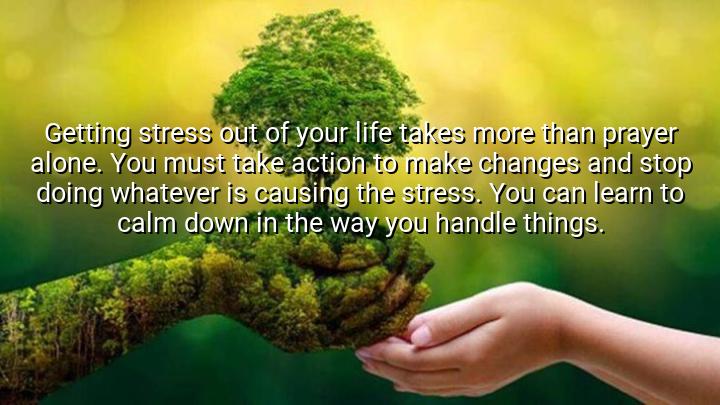




The quote "Getting stress out of your life takes more than prayer alone. You must take action to make changes and stop doing whatever is causing the stress. You can learn to calm down in the way you handle things." by Joyce Meyer emphasizes that dealing with stress requires more than just spiritual practices like prayer. While prayer can offer comfort and guidance, Meyer argues that action is necessary to bring about real change in one’s life. Simply praying for relief without making the effort to address the root causes of stress won’t be enough to achieve lasting peace or calm.
Meyer suggests that personal responsibility plays a crucial role in managing stress. In order to effectively reduce stress, individuals must take proactive steps to identify and eliminate the sources of their stress. This may involve making lifestyle changes, setting boundaries, or adjusting one’s approach to problems and challenges. It’s about recognizing that prayer alone won’t solve everything; tangible actions are needed to support mental and emotional well-being.
The quote also touches on the idea of learning how to handle stress in a healthier way. Meyer proposes that by developing coping strategies and changing the way one approaches stressful situations, individuals can calm down and regain control over their emotions. This implies that stress management is not just about eliminating stressors but also about cultivating a mindset and skill set that allows you to handle stress in a more constructive and productive manner.
Ultimately, Meyer’s message is about finding a balance between spiritual practices and practical actions when it comes to managing stress. She encourages individuals to not only seek peace through prayer but to take responsibility for their well-being by making intentional changes in their lives. Stress management, according to Meyer, is an active process that involves both inner peace and external actions to create lasting calm and reduce anxiety.

Tthanhthuy
This makes me reflect on the importance of self-awareness in managing stress. Recognizing what causes stress and choosing to stop or change those triggers is powerful. How can people develop this awareness and the courage to act? It’s a hopeful message that stress is not an unchangeable fate, but something we can learn to navigate better.
STHung Si Tray
I’m curious about how cultural or religious backgrounds influence approaches to stress. Does this advice resonate differently with people who prioritize prayer or meditation versus those who favor cognitive or behavioral techniques? How can different traditions be integrated to support stress relief? This quote opens a dialogue on diverse paths to emotional well-being.
TTtrang tran
This quote makes me think about the common misconception that stress can be resolved passively. What kinds of changes are most effective in reducing stress—changing environments, routines, or attitudes? How can people identify the root causes of their stress instead of just managing symptoms? It’s a practical reminder to take an active role in emotional health.
MCMr coffee
Could this statement be seen as a challenge to those who might expect instant relief through prayer alone? It seems to promote personal responsibility in health and happiness. How might this perspective empower individuals or, conversely, make them feel burdened? It’s interesting to explore the balance between faith, personal effort, and external circumstances.
CDChi Dang
I appreciate the emphasis on learning to handle situations differently. Stress often feels overwhelming, but this suggests that developing new coping skills can make a difference. How can individuals cultivate calmness proactively? What role do habits, mindfulness, or therapy play alongside prayer and faith? This quote encourages a holistic approach to stress management.