

Freedom is a choice. The grace of God abounds, and man is nonetheless free.
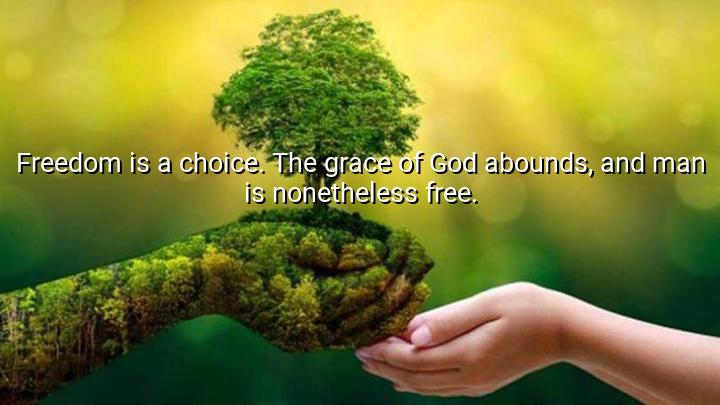




In this quote, Michael J. Knowles asserts that freedom is ultimately a matter of personal choice. He suggests that despite the presence of God’s grace, which he views as an abundant force in the world, human beings are still responsible for making their own decisions and exercising their freedom. Knowles emphasizes the idea that freedom is not something that is merely granted or imposed by external forces, but something individuals actively claim through their actions and choices.
Knowles connects freedom to the idea of grace, which in this context likely refers to the divine favor or mercy that is offered by God. He acknowledges the grace of God as a powerful and pervasive influence, yet he maintains that this divine grace does not remove human freedom. Rather, it coexists with the freedom to choose and act, indicating that God's grace and human autonomy are not mutually exclusive but can work together.
The quote also suggests that freedom is not always about external circumstances but about personal responsibility and the ability to make choices, even within the framework of divine grace. Knowles points to the importance of moral agency—the ability of individuals to make decisions that align with their values, regardless of their spiritual or religious context. This underscores the idea that freedom is both a gift and a responsibility, and that we are free to choose how we act, even when grace is at work.
Ultimately, Knowles’ quote suggests that freedom is a fundamental aspect of the human experience, one that exists independently of divine influence but can be enriched by it. It challenges the idea that grace diminishes human autonomy, proposing instead that freedom and grace can coexist, allowing individuals to make meaningful choices while still being shaped by spiritual or moral guidance.

AAdministratorAdministrator
Welcome, honored guests. Please leave a comment, we will respond soon