

Cherish all your happy moments; they make a fine cushion for old age.
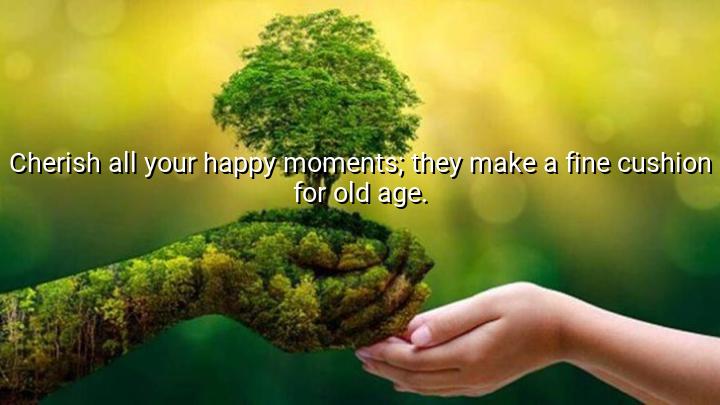




The quote "Cherish all your happy moments; they make a fine cushion for old age" by Booth Tarkington speaks to the importance of collecting joyful memories throughout life, which can provide emotional comfort and support as we grow older. Tarkington, an American novelist and playwright, emphasizes that happiness and positive experiences are not just fleeting moments, but essential resources that can help us navigate the challenges of aging. By cherishing these moments, we create a mental and emotional "cushion" that can soften the difficulties that may come with old age.
Tarkington’s words suggest that as we age, it is inevitable that we will face challenges, such as physical decline, loss, or loneliness. However, the happy moments we have accumulated throughout life can provide a sense of peace and strength during times of hardship. These memories act as a source of comfort, reminding us of the good times and the fulfilling experiences we’ve had, which help us maintain a sense of gratitude and joy even in our later years.
The quote also highlights the idea that happiness is something that can be cultivated and carried with us. Instead of focusing solely on material possessions or external achievements, Tarkington emphasizes that emotional fulfillment—through positive memories and experiences—is what truly sustains us. These memories serve as a cushion against the inevitable hardships of aging, allowing us to face the future with a sense of contentment and resilience.
Ultimately, Tarkington’s quote encourages us to appreciate and collect the happy moments in life, as they will not only enrich our present but also provide us with emotional strength in the future. By focusing on the positive and nurturing a sense of joy, we can carry the warmth of those experiences with us into old age, helping us to navigate the inevitable changes with a more grateful and optimistic outlook.

ADAndrew Dan
I find this quote gentle and reassuring, like it’s giving permission to prioritize joy without guilt. In a world that often values productivity over peace, this feels radical in a subtle way. Do you think our culture undervalues happiness in the pursuit of success? And if so, does that mean some people arrive at old age with fewer emotional cushions than they could’ve had?
TTthu thu
This quote makes aging feel a little less intimidating, which is kind of rare. I think there’s real wisdom in the idea that emotional wealth can sustain us as we grow older. But what about people who are naturally more pessimistic or anxious? Is cherishing happy moments a skill that can be learned, or is it more of a personality trait? I’d love to hear thoughts on that.
MNNguyen Minh Nhat
There’s a warm, almost nostalgic truth in this quote that really sticks with me. But I’m wondering—are happy moments really something we can store up, or is their power more symbolic? Maybe it’s not about the moments themselves, but about the emotional resilience they provide. Do you think people who reflect on joy more often tend to age more positively or even live longer?
HSTran thi hong sen
Tarkington’s quote is beautifully optimistic. It almost makes me want to start a 'happiness journal' just to keep a record of the joyful moments I often overlook. But at the same time, I wonder: are we sometimes so focused on creating memories for the future that we forget to live in the present? What’s the balance between cherishing and chasing happy moments versus simply being in them?
LSNguyen Lam Son
I love this quote—it’s comforting, really. But it also raises a question for me: what if someone hasn’t had many happy moments to reflect on? What if their life was marked by hardship more than joy? Does that mean their 'cushion' is thinner, so to speak? I’m curious how people who’ve faced adversity build emotional resilience without relying on a wealth of cheerful memories.