

So long as we can lose any happiness, we possess some.
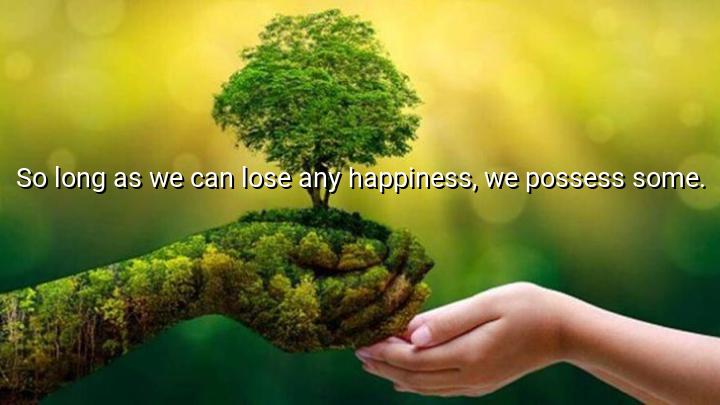




In this quote, Booth Tarkington suggests that as long as we are capable of losing happiness, it means we still possess some. The idea is that happiness is a dynamic state, something we experience and can lose, but the ability to feel its absence indicates that we have known it in the first place. By recognizing that we can lose happiness, we affirm that it has been present in our lives at some point, and its loss reveals the depth of our previous joy.
Tarkington's message also points to the impermanence of happiness. Since happiness can be lost, it suggests that it is not a constant or permanent state. This impermanence, however, does not diminish its value. In fact, it may make the moments when we experience happiness even more precious, as they are fleeting and subject to change. The contrast between happiness and its absence allows us to appreciate and recognize the moments of joy when they arise.
The origin of this quote can be traced to Booth Tarkington, an American novelist and dramatist known for his works exploring the complexities of American life. Tarkington often examined themes of personal growth, ambition, and social dynamics in his writing. His quote reflects his understanding of the human condition, particularly the way people interact with emotions like happiness and sorrow.
Ultimately, Tarkington’s quote teaches that happiness is valuable not only for the moments when we experience it but also because of its fleeting nature. The awareness that we can lose happiness helps us realize that we have experienced it, making the moments of joy we encounter more meaningful. By understanding the transitory nature of happiness, we can appreciate it more deeply and live with greater awareness of our emotional states.

AAdministratorAdministrator
Welcome, honored guests. Please leave a comment, we will respond soon