

Change alone is eternal, perpetual, immortal.
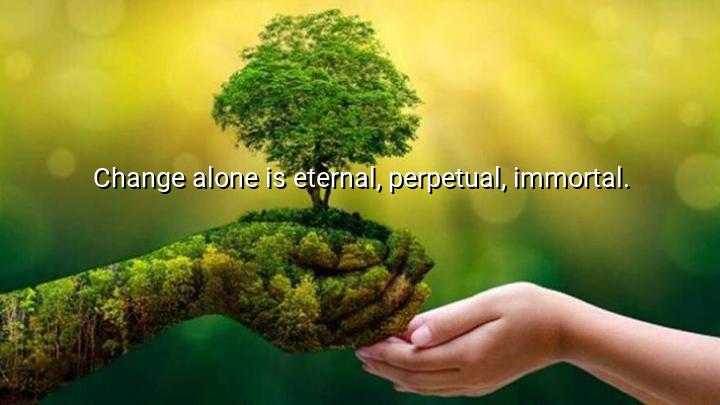




The quote, " Change alone is eternal, perpetual, immortal," is attributed to Arthur Schopenhauer, a German philosopher known for his pessimistic view of life and his philosophy centered on the will and human suffering. In this statement, Schopenhauer reflects on the nature of change as an unstoppable force in the universe. He suggests that while everything else in life—whether it be people, situations, or material things—is transient, change itself is the only constant, enduring through all of existence.
Schopenhauer's philosophy often focuses on the inevitable impermanence of the world around us. By describing change as eternal, perpetual, and immortal, he highlights its role as the singular, unwavering element that shapes the course of life. Everything in nature and human existence undergoes cycles of growth, decay, and transformation, and change is the force that drives these processes, making it a permanent feature of reality.
In this sense, Schopenhauer contrasts change with the static nature of many human desires and the pursuit of lasting happiness. While we may seek stability or permanence in relationships, achievements, or possessions, these things are ultimately fleeting. Change is the one constant that transcends human efforts to maintain stability, making it a force beyond our control, yet also a source of renewal and transformation.
Ultimately, Schopenhauer's quote serves as a reminder of the unpredictable and ever-evolving nature of existence. It invites reflection on the impermanence of all things and suggests that in embracing change, we may come to accept the flow of life as a natural and unchanging truth. This understanding can offer a sense of peace, as we recognize that nothing remains the same forever, and change is an intrinsic part of our experience.

TCThuan Cao
I’m interested in how this concept applies to personal identity. If everything is in constant change, what anchors our sense of self? Is identity a fixed essence or a continuous process? How can understanding change as eternal influence how we relate to ourselves and others over time?
QHDam Quang Hiep
Emotionally, the idea that change is perpetual can be both comforting and unsettling. Does this quote inspire hope that no hardship is permanent, or does it provoke anxiety about constant flux? How might cultivating mindfulness and presence help us navigate the eternal flow of change with grace?
TLThanh Long
Reading this, I wonder about the role of change in creativity and innovation. If nothing remains the same, how do we balance honoring tradition with embracing new ideas? Does this perpetual change foster progress, or can it lead to instability and uncertainty? How do individuals and societies manage this tension?
TTHuyen Trang Tran
I’m curious about how different philosophies and cultures interpret the idea of change. Does Schopenhauer’s view align with Eastern philosophies like Buddhism that emphasize impermanence? How do these perspectives affect our daily choices and attitudes toward suffering, joy, and loss? Can accepting eternal change lead to greater peace?
GV43-Huynh Gia Vi
This quote makes me think about the paradox of seeking permanence in an impermanent world. If change is eternal and immortal, is our desire for stability an illusion? How can recognizing change as fundamental influence how we approach relationships, careers, or personal growth? Could this understanding encourage a more fluid and open mindset?