

Being alone with fear can rapidly turn into panic. Being alone with frustration can rapidly turn into anger. Being alone with disappointment can rapid turn into discouragement and, even worse, despair.
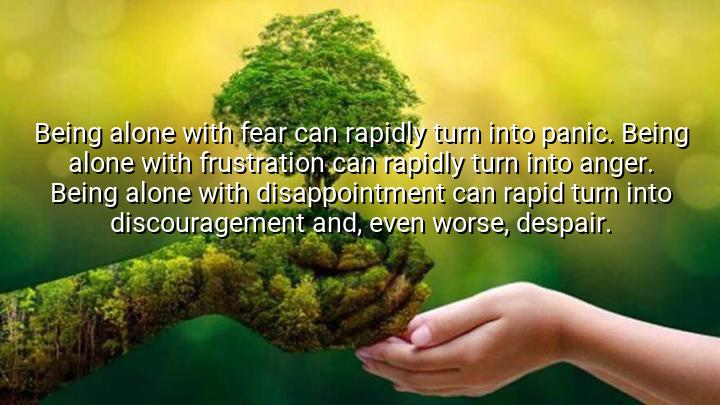




In this quote, Mark Goulston explores the emotional effects of being alone with certain negative emotions. He suggests that emotions like fear, frustration, and disappointment can quickly escalate into more intense feelings if not addressed or processed properly. For example, when someone is alone with fear, it can rapidly transform into panic, overwhelming their ability to think clearly and act rationally. This highlights how isolation can intensify negative emotions, leading to a cycle of distress.
Goulston extends this idea to frustration, stating that when alone with it, frustration can turn into anger. This speaks to how unresolved tension or feelings of helplessness can quickly manifest as hostility or aggression. The absence of external support or perspective can cause these feelings to fester, rather than dissipate. Similarly, when alone with disappointment, the initial sense of loss or unmet expectation can spiral into discouragement or even despair—feelings that undermine one’s sense of hope and motivation.
The quote emphasizes the dangerous potential of being alone with negative emotions, as isolation can prevent individuals from seeking support or finding healthy outlets for their feelings. Goulston’s words caution against the power of unchecked emotions, especially when they are left to grow unchecked in solitude. The implication is that human connection and external perspective are vital in managing and diffusing the intensity of difficult emotions.
Ultimately, Goulston’s message underscores the importance of not facing difficult emotions alone. It serves as a reminder of how quickly emotions like fear, frustration, and disappointment can escalate into more harmful states when there is no intervention or social support to help process them. This quote encourages seeking connection and emotional guidance to prevent these feelings from overwhelming us.

MHTran Nguyen Minh Huyen
Goulston’s observation is unsettling because it’s so true—painful emotions left unchecked tend to mutate. But I wonder if there are warning signs we can look out for before things spiral. What role does self-awareness play in stopping that emotional progression? And can we learn to process fear, frustration, or disappointment in real time, rather than letting them fester in isolation?
AVAnh Viet
This quote really challenges the myth that we should be able to 'handle things on our own.' It feels like a quiet argument for vulnerability and reaching out. But what if the person doesn’t have a support network? Is there a point where professional help becomes the only path out of emotional escalation? It makes me think mental health literacy should be taught as early as possible.
NLNgu Le
I find this insight powerful, especially in today’s world where loneliness is such a widespread issue. But I wonder, does this mean solitude is always risky? Or is it the quality of solitude that matters? Can mindful practices like journaling or meditation counteract the downward spiral described here? I’d like to explore how someone can be alone—but not emotionally isolated—in tough moments.
VHVuong Hoang
This quote makes me think about the importance of community and emotional expression. But what happens to people who don’t feel safe sharing their emotions? Some of us are taught to internalize things, which might accelerate the descent into panic, anger, or despair. Is it ever possible to train ourselves to be better companions to our own emotions, especially when no one else is available?
THLo Thi Hue
Goulston’s words hit home. I’ve definitely experienced how emotions can snowball when there’s no one to talk to. But what kind of support makes the biggest difference? Is it about having someone physically present, or just knowing you’re emotionally connected? I’m curious if certain relationships—like close friends vs. trained professionals—have different impacts on how we manage fear, frustration, or disappointment before they escalate.