

Being alone on the moors is scary; as the rain clouds settle in, it makes you realise your place in nature.
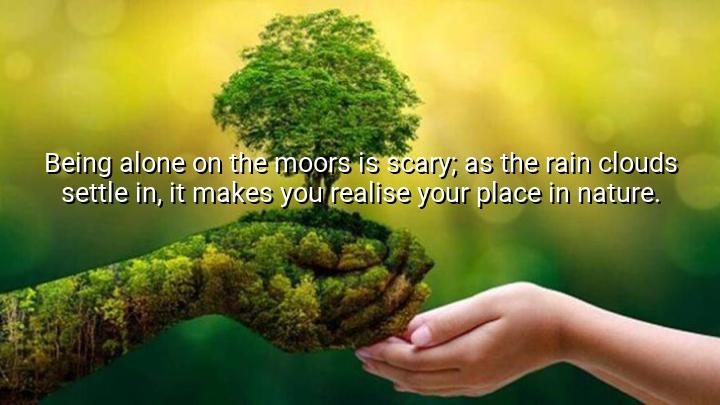




The quote "Being alone on the moors is scary; as the rain clouds settle in, it makes you realise your place in nature." by Dave Davies reflects the humbling and sometimes unsettling experience of solitude in the vastness of nature. Davies is highlighting the eerie and isolating feeling that can come with being alone in an environment like the moors, a landscape known for its remote, rugged beauty. The arrival of rain clouds intensifies the feeling of insignificance and vulnerability, as the vast, uncontrollable forces of nature remind him of his smallness in the world.
Davies' words suggest that solitude in nature can be both scary and revealing. When isolated in such an environment, the individual is forced to confront their place in the natural world, realizing how powerless they are in the face of the larger forces of weather and nature. The shifting weather conditions serve as a metaphor for the transience and fragility of human existence, highlighting the stark contrast between human intention and the overwhelming power of the natural world.
The quote also speaks to the reflective aspect of solitude. Being alone in nature allows one to contemplate their relationship with the world around them, drawing attention to how humans often take their connection with nature for granted. As the rain clouds gather and the environment changes, the individual is reminded of how insignificant they are compared to the vastness of the earth.
The origin of this quote comes from Dave Davies, an English musician and songwriter, best known as a member of the iconic rock band The Kinks. Known for his introspective lyrics and exploration of personal and social themes, Davies often used his experiences in nature and solitude to inspire his music. This quote reflects his ability to find deeper meaning in everyday experiences, particularly in the context of nature's power to evoke feelings of humility and self-awareness.

TVTran Minh Tue Vo
The quote evokes a sense of humility before nature’s power. How might this feeling of smallness influence our behavior towards the environment? Does recognizing our place in nature inspire stewardship or acceptance of natural cycles? What role do such experiences play in shaping ecological consciousness?
TTam
I’m curious about how this experience compares to urban solitude. Does nature’s unpredictability make solitude more intense or meaningful? How do environments shape our emotional responses to being alone? Could regular immersion in nature offer a remedy for the alienation many feel in cities?
IDImFrom Dark
Davies’ reflection invites questions about solitude’s role in self-discovery. How might being alone in challenging natural settings lead to personal growth or clarity? Could this experience be therapeutic, helping people escape the distractions of modern life? How does the realization of one’s place in nature influence mental health and perspective?
JHjolek hdok
This quote makes me wonder about the contrast between fear and awe in nature. How does the setting of moors and rain clouds amplify these emotions? Does confronting such raw elements remind us of our mortality or insignificance? Could embracing this fear be a way to appreciate life’s fragility and beauty more fully?
TDNguyen Tuan Dung
Dave Davies captures the profound, almost humbling experience of solitude in nature. How do you think being alone in such wild environments shifts our perspective on human significance? Is the fear he mentions a natural response to vulnerability, or could it also spark a deeper connection with the earth? Could moments like these help foster environmental awareness and respect?