

A compassionate mind is very difficult to cultivate because compassion demands a sense of equality between all living beings.
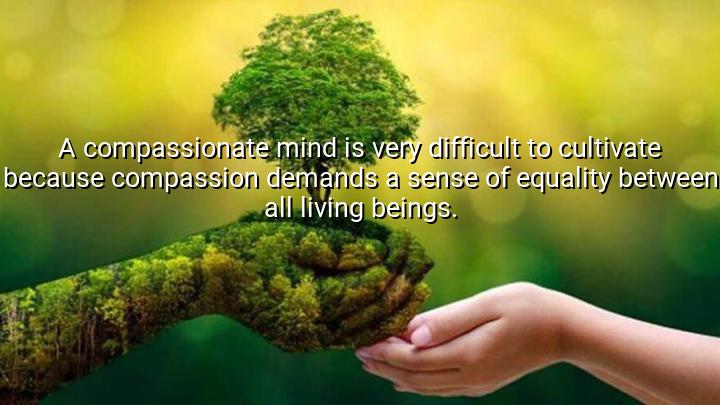




Lobsang Tenzin's quote highlights the difficulty of cultivating a truly compassionate mindset. He argues that compassion requires a deep recognition of the equality between all living beings, which can be a challenging perspective to adopt. In his view, to truly feel and act with compassion, one must overcome biases, judgments, and distinctions based on factors like status, race, or species, recognizing the intrinsic value of every life.
The notion of equality is central to this idea of compassion. Tenzin suggests that compassion isn't just about feeling sympathy or pity for others; it requires an active and conscious effort to see all beings—whether humans, animals, or other forms of life—as deserving of respect, kindness, and care. This type of universal compassion goes beyond superficial gestures, urging individuals to adopt a worldview that transcends divisions and sees all beings as fundamentally equal.
Tenzin’s statement also reflects the Buddhist philosophy, which emphasizes interconnectedness and the need for compassion to be rooted in a genuine understanding of the equality of all beings. The difficulty of this task, as he mentions, stems from human tendencies to prioritize certain groups over others or to categorize people based on superficial differences. In Buddhism, overcoming these mental barriers is seen as essential to attaining true compassion and peace.
Ultimately, Tenzin’s quote encourages a reflection on the depth of compassion and the work it requires to truly cultivate it in everyday life. His words suggest that compassion is not a passive feeling but an active practice that requires constant awareness of the equality between all forms of life, and an ongoing effort to challenge the biases that prevent us from fully embracing it.

AAdministratorAdministrator
Welcome, honored guests. Please leave a comment, we will respond soon