

Bodily discomfort and emotional fear and attachment make the dying uncomfortable and fearful. So, to help those dying people, I think modern medical science has a lot of facilities to reduce pain, or perhaps not to reduce pain, but not to experience pain.
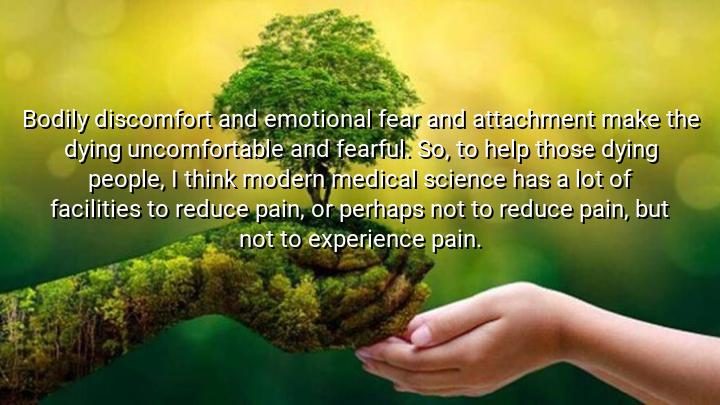




The quote "Bodily discomfort and emotional fear and attachment make the dying uncomfortable and fearful. So, to help those dying people, I think modern medical science has a lot of facilities to reduce pain, or perhaps not to reduce pain, but not to experience pain" by Lobsang Tenzin explores the role of modern medicine in easing the suffering of the dying. Tenzin suggests that physical pain and emotional fear—often compounded by attachment—make the experience of dying deeply uncomfortable and frightening. By recognizing the physical and psychological challenges of death, Tenzin calls attention to how medical advancements can alleviate or even eliminate these discomforts, offering a more peaceful transition for the dying.
The core of the quote centers around the idea that pain relief should not only focus on diminishing pain but also on helping individuals not experience it at all. Tenzin suggests that modern medical science provides tools, such as palliative care and pain management techniques, that can ensure a person’s final moments are as comfortable and free of fear as possible. This reflects his belief that, while death is inevitable, the suffering associated with it does not have to be.
The origin of this thought is rooted in Tenzin's Buddhist perspective, which emphasizes the transitory nature of life and the significance of alleviating suffering in all forms. Buddhism often discusses the importance of overcoming attachment and fear in the face of death, seeing these as barriers to a peaceful passing. Tenzin’s words suggest that science and spirituality can work in tandem, with medicine providing the means to reduce suffering while allowing the spiritual process of dying to unfold with grace.
Ultimately, Tenzin’s message calls for compassion in the way we approach death. It advocates for a balance between medical interventions and emotional support for those nearing the end of life, ensuring that they are not only physically at ease but also emotionally prepared for what lies ahead.

AAdministratorAdministrator
Welcome, honored guests. Please leave a comment, we will respond soon