

A Buddha is someone who finds freedom in good fortune and bad.
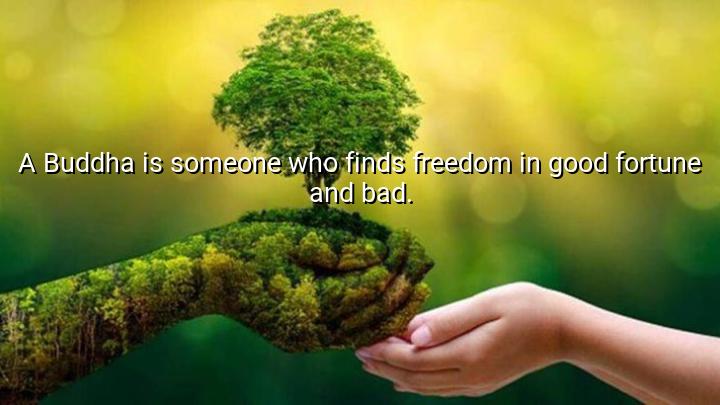




In this quote, Bodhidharma, the Buddhist monk traditionally credited with bringing Zen Buddhism to China, reflects on the nature of freedom and how it transcends external circumstances. He suggests that a Buddha, or an enlightened being, is not affected by the ups and downs of life, whether they be good fortune or bad. Instead, a Buddha finds inner peace and freedom regardless of the external situations they encounter, showing that true freedom comes from within and is not dependent on external conditions.
Bodhidharma’s statement speaks to the Buddhist belief in equanimity—a balanced state of mind that remains undisturbed by the fluctuations of life. Good or bad fortune, wealth or poverty, success or failure—none of these define the Buddha’s sense of self or their level of contentment. Instead, freedom lies in cultivating an inner state of awareness, detachment, and acceptance of the present moment, where the external world does not have the power to dictate one’s happiness or peace.
The quote also emphasizes the core Buddhist concept that true freedom is achieved through mental clarity and understanding, not through the pursuit of external desires or material wealth. By detaching from the need for things to be a certain way, the Buddha is able to maintain inner peace and live in harmony with the world, regardless of its changes or challenges.
Bodhidharma is a legendary figure in Zen Buddhism, known for his teachings on meditation, self-realization, and the nature of mindfulness. His philosophy underscores the idea that enlightenment and freedom are not dependent on worldly conditions, but on the cultivation of inner wisdom and spiritual practice. This quote encapsulates his approach to life and spirituality, where true peace comes from mastering one’s inner state rather than trying to control external circumstances.

AAdministratorAdministrator
Welcome, honored guests. Please leave a comment, we will respond soon