

You think about child abuse and you think of a father viciously attacking a daughter or a son, but in my family it was my mother. My mother, I would say, was a... very brutal disciplinarian.
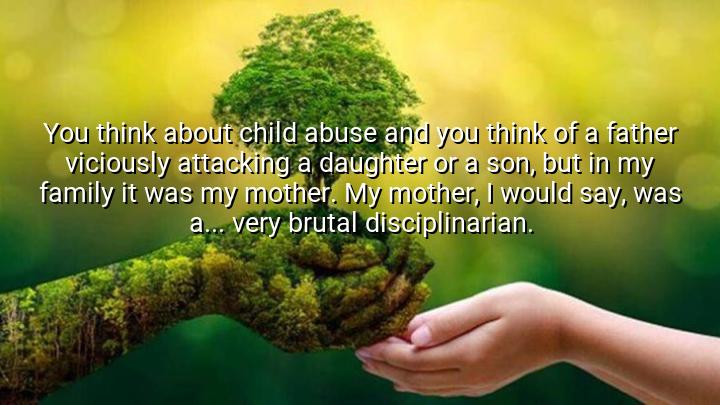




The quote “You think about child abuse and you think of a father viciously attacking a daughter or a son, but in my family it was my mother. My mother, I would say, was a... very brutal disciplinarian” by Lynn Johnston sheds light on the hidden and often unexpected forms of child abuse. Johnston, the Canadian cartoonist best known for the comic strip “For Better or For Worse,” challenges the stereotype that abuse typically comes from a father figure, revealing that in her family, it was her mother who inflicted harm. By describing her as a “very brutal disciplinarian,” she highlights the emotional and physical severity of her childhood experiences.
The origin of this quote comes from Johnston’s personal reflections on her upbringing, which she has discussed in interviews and biographical features. Her willingness to speak openly about family abuse contrasts with the domestic idealism often associated with her comic strip, which depicted both heartwarming and realistic family life. This duality reflects how creative expression can emerge from personal struggles, as Johnston has acknowledged that some of her family-related storytelling was informed by her own difficult childhood.
This quote also reveals the complexity of abuse narratives and the emotional impact of parental relationships. By emphasizing that child abuse is not always perpetrated by fathers, Johnston brings attention to societal blind spots regarding maternal violence and strictness. Her use of the term “brutal disciplinarian” suggests that the abuse was normalized under the guise of discipline, a dynamic that resonates with many who grew up in strict or abusive households where emotional scars lasted long after childhood.
Ultimately, Johnston’s words are a candid acknowledgment of trauma and truth-telling. They highlight the importance of breaking silence around family abuse, challenging assumptions and encouraging empathy for survivors. Her honest reflection not only contextualizes her personal history but also reinforces the idea that abuse can exist behind any family facade, regardless of gender roles or societal expectations.

AAdministratorAdministrator
Welcome, honored guests. Please leave a comment, we will respond soon