

You can't have a healthy civilization without healthy soil. You can't have junk food and have healthy people.
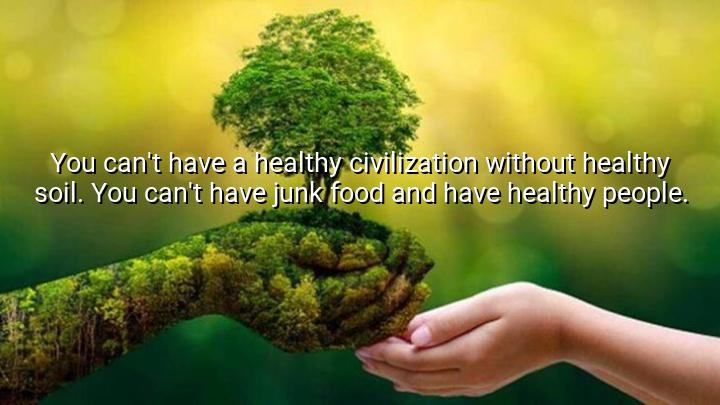




The quote “You can't have a healthy civilization without healthy soil. You can't have junk food and have healthy people.” by Joel Salatin underscores the profound connection between agriculture, diet, and public health. Salatin draws a clear line from the condition of the soil to the well-being of society, suggesting that the foundation of a thriving civilization begins with how we treat the earth. If the soil is depleted, contaminated, or poorly managed, it cannot produce truly nutritious food, and the consequences ripple outward—affecting not just individual health, but the stability and sustainability of whole communities.
Joel Salatin, a prominent farmer, author, and advocate for sustainable agriculture, is known for challenging industrial farming practices and promoting regenerative farming techniques. This quote comes from his ongoing efforts to raise awareness about the long-term impact of modern agricultural systems, particularly those that prioritize mass production and profit over ecological balance. Salatin argues that we cannot separate the quality of our food systems from the quality of our health and environment.
In the second part of the quote, Salatin critiques the rise of junk food—processed, nutrient-poor products high in sugar, salt, and unhealthy fats. He emphasizes that societies cannot expect to maintain health and vitality if their diets are dominated by such artificial foods. This statement calls attention to how nutrition, farming, and lifestyle are intertwined, and how neglect in one area can lead to widespread problems in another, including chronic illness, environmental degradation, and cultural decline.
Ultimately, Salatin's quote is a call to action—encouraging a return to wholesome, soil-conscious farming and nutrient-dense eating. It challenges individuals and institutions to reconsider how food choices affect not only personal health, but the health of the planet and the civilization built upon it. It reflects his larger mission of inspiring people to reconnect with the land, understand the sources of their food, and take responsibility for shaping a healthier future.

AAdministratorAdministrator
Welcome, honored guests. Please leave a comment, we will respond soon