

What we're looking at is God's design, nature's template, and using that as a pattern to cut around and lay it down on a domestic model to duplicate that pattern that we see in nature.
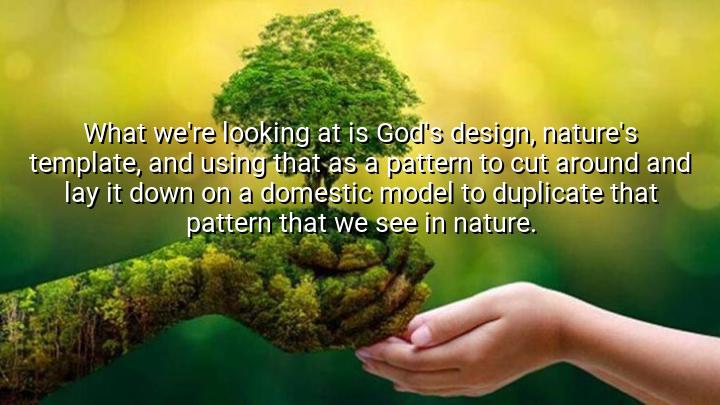




Joel Salatin’s quote—“What we’re looking at is God’s design, nature’s template, and using that as a pattern to cut around and lay it down on a domestic model to duplicate that pattern that we see in nature”—reflects his belief in drawing inspiration from the natural world to create sustainable systems, particularly in agriculture. Salatin is emphasizing that nature provides a perfect blueprint, a template created by God, that humans can replicate to create more harmonious and efficient systems. By following the patterns found in nature, one can create models that align with the environment and foster greater ecological balance.
The origin of this idea comes from Salatin’s work as a farmer and advocate for sustainable agriculture. As a proponent of holistic farming practices, Salatin often stresses the importance of observing and learning from the natural systems around us. He believes that nature’s processes, which have evolved over millennia, are the most efficient and effective, and that replicating them in domestic models—such as farming or building systems—can lead to more sustainable and thriving outcomes.
By referring to God’s design and nature’s template, Salatin underscores a spiritual and ecological connection to the world around us. He suggests that nature’s inherent balance and order are the most reliable guides for human action. The idea is that nature has already developed systems that work in perfect harmony, and it is our responsibility to observe and integrate these systems into our own designs, whether in agriculture, architecture, or any other human endeavor.
Ultimately, Salatin’s quote calls for a deeper respect for the wisdom embedded in the natural world. By seeing nature as a template or pattern, we can better understand how to create sustainable practices that work with the environment, rather than against it. This philosophy advocates for a return to practices that respect the natural order and promote the well-being of both humans and the planet.

AAdministratorAdministrator
Welcome, honored guests. Please leave a comment, we will respond soon