

When a noble life has prepared old age, it is not decline that it reveals, but the first days of immortality.
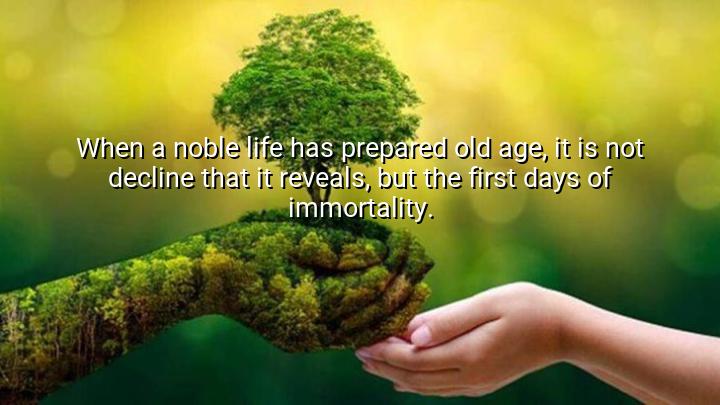




The quote "When a noble life has prepared old age, it is not decline that it reveals, but the first days of immortality" by Muriel Spark reflects the idea that a life lived with purpose, virtue, and integrity shapes the experience of aging in a deeply positive way. Spark, a Scottish author known for her sharp wit and profound observations on life, suggests that when someone has lived a noble life, their old age is not marked by decline or decay, but rather by the continuation of their legacy and the immortal nature of their character and actions.
The key idea in this quote is that old age is not just about physical or mental decline but about the culmination of a life’s work and values. A person who has led a meaningful and honorable life, filled with wisdom, kindness, and contribution to others, does not fade into obscurity as they age. Instead, their character and accomplishments become a lasting source of inspiration and influence, creating a sense of immortality through their impact on the world.
Spark's quote suggests that aging can be a time of continuity rather than loss. It challenges the common belief that old age signifies a decline or end. For someone who has led a noble life, the legacy they leave behind continues to grow and inspire, even as their physical existence diminishes. This perspective on aging allows individuals to feel a sense of purpose and fulfillment as they approach the later years of life.
Ultimately, Spark’s reflection on aging and immortality encourages a mindset that embraces the idea that a well-lived life, filled with virtue and purpose, carries lasting significance beyond physical existence. In this sense, old age is not something to be feared, but a period when the immortal aspects of one’s character—like kindness, integrity, and wisdom—are revealed and endure.

PTphuong truc
I love how this reframes old age—not as something to be feared, but as a moment of culmination and even quiet triumph. It makes me reflect on how our mindset toward aging is often rooted in fear. Could a shift toward this more spiritual or poetic view change how we approach our later years? And what can younger generations learn from elders who have lived with such noble intent?
MCNg Ngoc Minh Chau
This quote made me pause. It’s rare to see old age described with such reverence. But does society still support people in living noble lives? With so much emphasis on material success and productivity, how do we define 'nobility' today? I think this quote challenges us to reconsider what we value and what kind of legacy we want to leave behind. It's less about aging gracefully and more about living meaningfully.
UGUser Google
There's a profound spiritual undertone here that I really appreciate. It frames the twilight of life as something sacred, almost divine. I wonder—do different cultures and religions interpret old age this way? Or is this view unique to certain philosophical or literary traditions? I'd love to hear more about how aging is seen across the world in this context of legacy and transcendence.
GDGold D.dragon
I find this sentiment both beautiful and challenging. It paints aging as a culmination of a meaningful journey rather than a slow loss. But what if someone reaches old age with regrets or unresolved pain? Can they still experience that sense of immortality, or is it too late? This quote inspires hope but also raises questions about forgiveness, redemption, and the possibility of transformation later in life.
HLLe Thi Hong Loan
This quote feels incredibly uplifting. It suggests that if you've lived with purpose and integrity, old age isn't an ending but a new kind of beginning. That really makes me think—are we doing enough in our younger years to prepare ourselves spiritually and emotionally for aging? What does a 'noble life' even mean today? Is it about service, wisdom, or simply staying true to our values across time?