

We strive for equality and equality in mental health matters as much as anything else. I see it as an imperative, not a choice.
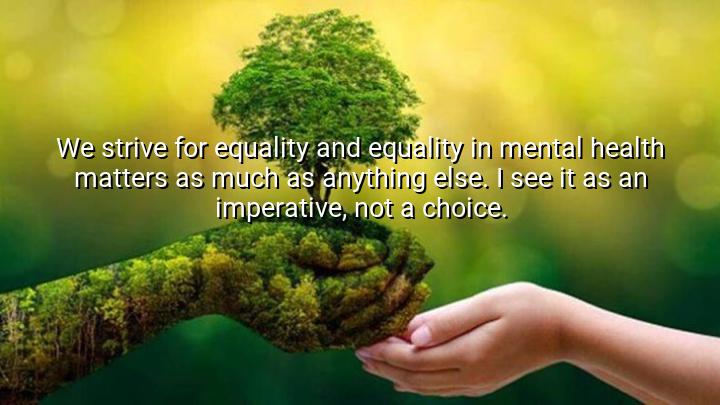




Luciana Berger’s statement, “We strive for equality and equality in mental health matters as much as anything else. I see it as an imperative, not a choice,” underscores her conviction that mental health must be treated with the same seriousness as other issues of equality. By repeating the word equality, she emphasizes its centrality not only in social and economic life but also in healthcare, where mental well-being has historically been marginalized.
The phrase “an imperative, not a choice” signals her belief that ensuring parity in mental health is a moral and political necessity. Too often, physical health has been prioritized, leaving psychological struggles underfunded, stigmatized, or ignored. Berger reframes the discussion by insisting that striving for mental health equality is not optional reform but a required step toward a just and fair society.
The origin of this quote lies in Berger’s work as a British politician and advocate for mental health reform. As a Member of Parliament and later as the President of the Mental Health Foundation, she consistently campaigned for greater investment in services, improved access to care, and a reduction in stigma. Her words reflect years of policy engagement aimed at making mental health central to public health debates, rather than a peripheral concern.
At its heart, the quote represents both advocacy and urgency. By linking mental health equality to broader struggles for justice, Berger situates it within the same moral framework as gender, racial, or economic equality. Her words remind us that true fairness in society cannot be achieved unless emotional and psychological well-being are given equal weight alongside physical health.
Would you like me to also connect this to how the “parity of esteem” movement in the UK influenced mental health policy around the time Berger was speaking?

AAdministratorAdministrator
Welcome, honored guests. Please leave a comment, we will respond soon