

We live in an age where everything is based on the short term.
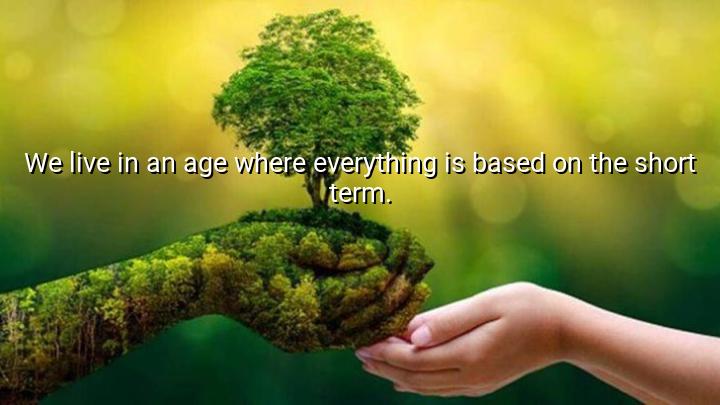




Howard Schultz’s quote, "We live in an age where everything is based on the short term," reflects his observation of modern society’s tendency to prioritize immediate results over long-term sustainability. Schultz is highlighting the short-term focus prevalent in many aspects of life, from business practices to personal goals, where quick rewards and instant gratification are often emphasized over enduring value and careful planning.
The quote criticizes the growing trend of seeking immediate returns, often at the expense of long-term benefits. In business, for example, many companies prioritize quick profits or rapid growth without considering the long-term health of their organization or the well-being of their employees. Schultz points out that this short-term mindset can be harmful, leading to decisions that may offer quick success but are unsustainable in the long run.
Howard Schultz, the former CEO of Starbucks, has often spoken about the importance of long-term vision and the value of investing in people and community for the future. This quote likely stems from his experiences in the business world, where he saw the consequences of focusing too heavily on short-term gains without regard for the broader impact.
Ultimately, the quote serves as a warning about the dangers of living in a short-term driven world. It urges individuals and organizations to consider the bigger picture and the importance of making decisions that will benefit them not just in the immediate future, but over the long term.

TNDuong Thao Nhi
This quote makes me wonder how individuals cope with the pressure to prioritize the short term. Does it lead to burnout, stress, or a sense of meaninglessness? Alternatively, could embracing short-term goals help people stay motivated and adaptable? I’d love to hear perspectives from people who actively resist this trend and those who embrace it. What mindset changes are necessary to navigate an age seemingly obsessed with immediacy?
LNLe Tran Long Nguyen
Could this short-term mindset be a symptom of larger societal issues, like economic pressures or political cycles? If decisions are always made with immediate gains in mind, what happens to sustainability, ethical standards, or investment in human capital? I’m interested in how this attitude affects not just business but environmental policies and social justice. Is there hope for a shift toward more thoughtful, long-term planning?
HLNguyen Thi Huong Ly
Reading this, I feel a sense of frustration because it suggests we’re losing sight of what really matters over time. But is this a universal truth, or are there cultures or communities that still prioritize long-term thinking? I also question whether younger generations feel trapped by this short-term focus or if they’re trying to redefine what it means to plan for the future. What role do education and leadership play in addressing this issue?
TNVuong Han Thien Nam
I agree that short-term thinking dominates many aspects of life, but could there be benefits to this approach? For example, does focusing on immediate results encourage innovation or responsiveness in fast-changing markets? Still, I’m curious if this trend undermines sustainability or deeper planning. What strategies can organizations and individuals use to balance short-term demands with long-term vision? This quote makes me want to explore the tension between urgency and patience.
TNanh thu nguyen
This quote hits a nerve with me because it reflects the pervasive impatience in modern culture. But I wonder, how much of this short-term focus is driven by technology and social media, which reward instant gratification? Are we sacrificing long-term goals and deeper fulfillment for quick wins? I’m concerned about the consequences for business, relationships, and even personal growth. How can we shift our mindset toward valuing the long haul again?