

We live in an age of innovation, where digital technology is providing solutions to problems before we've even realised we needed them. We see it every day as we find new ways to travel, eat and shop.
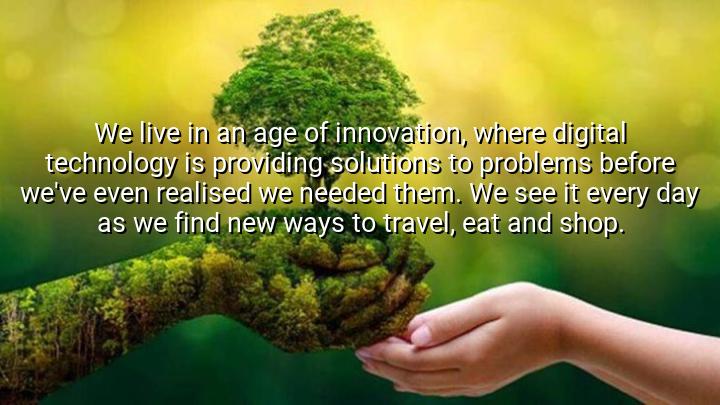




In this quote, David Lidington reflects on the rapid pace of innovation in the modern world, particularly driven by digital technology. He highlights how technological advancements are solving problems even before we recognize the need for them. This speaks to the concept of anticipatory innovation, where technology predicts and addresses challenges that society has yet to fully comprehend. Lidington emphasizes that we experience these innovations daily, particularly in the realms of travel, food, and shopping—areas that have been dramatically transformed by digital solutions.
Lidington’s statement underscores the idea that digital technology is not just reactive but proactive, continually shaping and evolving our experiences. Technologies like smartphones, apps, and online platforms are constantly developing to meet needs that were not previously obvious. For example, innovations such as ride-sharing apps or food delivery services were developed to address convenience, but their widespread adoption happened rapidly as people began to realize how they could improve daily life.
This quote also draws attention to how innovation is changing the way we approach traditional activities and services. From how we travel (e.g., Uber, electric scooters) to how we eat (e.g., meal kits, delivery services) and shop (e.g., online retail, e-commerce), digital solutions are continuously reshaping the consumer experience. Lidington is pointing out that we are living in an era where technology is both enabling and driving the future, often without us realizing it.
Ultimately, David Lidington’s quote highlights the transformative power of innovation in today’s world, especially through the lens of digital technology. It suggests that we are in an age where technology is not just a tool to solve existing problems but is proactively anticipating and shaping our needs before we even recognize them, significantly altering how we live, work, and interact with the world.

TNVuong Thi Nga
It’s fascinating how quickly we’ve normalized things that were unthinkable just a decade ago—ordering food with a swipe, catching a ride from a stranger, or even having AI recommend what to watch or buy. But I also worry—does this instant access dull our creativity or patience? Are we outsourcing too much of our decision-making to algorithms? It's exciting, but also a little disorienting at times.
BDVuong Bao Duy
There’s a lot of truth in how innovation has reshaped everyday life, but I think we need to ask: who's defining the problems these technologies are solving? Sometimes it feels like companies create solutions mainly to drive consumption or profit. Are we being convinced we have problems so we’ll embrace the next device or app? I'd like to explore how we can balance genuine utility with mindful tech adoption.
TTDo Thi Thao
While I appreciate the optimism in this quote, I’m a little uneasy about technology solving issues we didn’t know we had. Doesn’t that kind of progress risk becoming intrusive or manipulative? When apps predict our wants before we voice them, are we being served or surveilled? I’d love to hear more perspectives on how we maintain autonomy and critical thinking in a world of hyper-personalized tech solutions.
VBTran Van Bien
I think this observation is spot-on. We're definitely living in a time when everything—from how we get groceries to how we communicate—has been reshaped by digital tools. But I wonder, are we adapting too quickly without questioning what we're leaving behind? Are these innovations improving quality of life for everyone, or just creating more divide between tech-savvy users and those left behind by digital change?
BNNg Bao Ngoc
This quote really makes me wonder—if technology is solving problems before we recognize them, are we gradually losing our ability to define problems for ourselves? Is there a risk that innovation might start driving needs instead of responding to them? It feels like we might be heading toward a future where convenience is prioritized over reflection. Do we still take time to ask whether a solution is necessary—or just novel?