

Trees and plants always look like the people they live with, somehow.
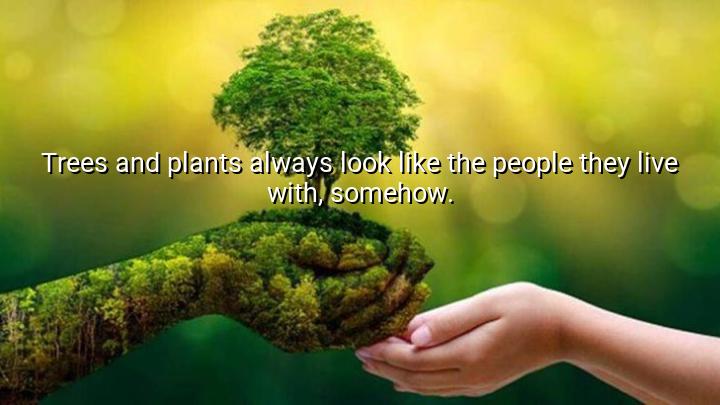




The quote by Zora Neale Hurston, "Trees and plants always look like the people they live with, somehow," suggests a deep connection between nature and human beings. Hurston implies that there is a certain mirroring relationship between the people who interact with and care for plants and the plants themselves. This metaphorical observation highlights the idea that the energy, personalities, and habits of humans are reflected in the way plants grow and thrive in their care. Just as people shape their environment, the environment—particularly the trees and plants—seems to reflect the influences of those who live within it.
Hurston’s statement also explores the notion of symbiosis between humans and nature. It suggests that the way humans tend to or live alongside plants affects their growth, appearance, and even the emotional resonance they have in the surroundings. For example, a person with a nurturing spirit may care for plants that bloom and flourish, while a more neglectful person might have plants that appear weaker or less vibrant. In this sense, plants become extensions of human behavior, energy, and personality.
The idea that trees and plants "look like the people they live with" also points to a cultural connection to the land and the environment. Plants are often cultivated based on the values, traditions, and aesthetic preferences of the people who care for them. The variety of plants in different cultures—whether it’s vibrant flowers, tall trees, or lush gardens—can often tell us something about the people who have cultivated them. Hurston’s quote encourages us to think about the subtle ways in which we, as humans, shape and are shaped by the environment around us.
The origin of this quote is rooted in Zora Neale Hurston’s broader exploration of the relationship between human nature and the natural world. As an anthropologist and writer, Hurston often examined the complexities of human identity, culture, and environment. This quote reflects her ability to observe human relationships with nature, making them not just physical but also deeply personal and symbolic. Through her unique lens, Hurston invites us to consider how the natural world mirrors human experiences and relationships.

AAdministratorAdministrator
Welcome, honored guests. Please leave a comment, we will respond soon