

There is not a fiercer hell than the failure in a great object.
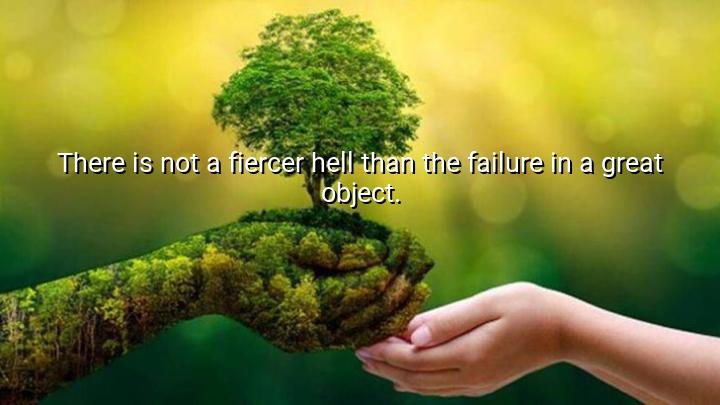




The quote by John Keats, "There is not a fiercer hell than the failure in a great object," expresses the intense emotional and psychological pain that comes with failing at something deeply important or meaningful. Keats suggests that failure in the pursuit of a significant goal or ambition feels far more devastating than the general disappointments in life. The quote reflects the idea that when one dedicates themselves to something truly important—whether it’s a creative project, a personal mission, or a larger purpose—the sting of failure is much more profound and heartbreaking than when failing in more trivial matters.
Keats' words imply that great aspirations come with immense emotional investment. When one pours their heart and soul into a grand endeavor, the loss or failure of that endeavor feels like a personal defeat rather than a simple setback. This speaks to the weight of passion and dedication: the more you care about the outcome, the more intense the pain of failure can be. In essence, failure in something that matters deeply can be an overwhelming and consuming experience.
The origin of this quote is tied to Keats’ poetic philosophy and his life as a poet. Known for his intense emotional depth and commitment to his craft, Keats often grappled with the pressures of creating art that would stand the test of time. His works are filled with a sense of both aspiration and anguish, reflecting the stakes involved in pursuing great artistic and personal goals. The quote may be understood in the context of Keats' own life, where he faced a short career marked by both early success and the looming specter of mortality and failure.
Ultimately, Keats’ quote highlights the fierceness of emotional investment in ambitious goals and the devastation that comes from falling short of achieving them. It encourages reflection on the human condition, where the most intense suffering often arises from our deepest desires and greatest endeavors. The quote serves as a poignant reminder of the stakes involved in the pursuit of meaningful achievements.

AAdministratorAdministrator
Welcome, honored guests. Please leave a comment, we will respond soon