

The passions grafted on wounded pride are the most inveterate; they are green and vigorous in old age.
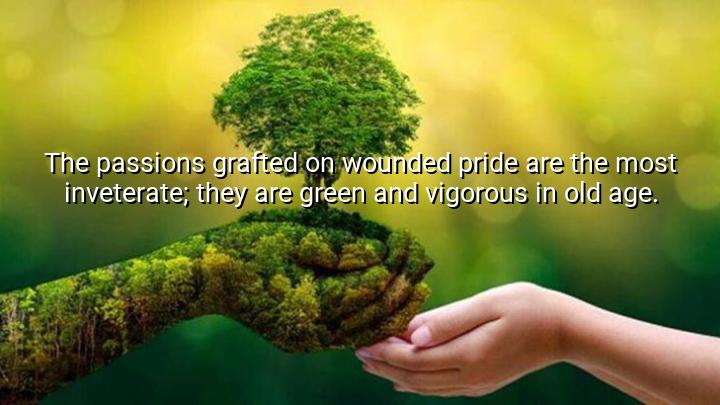




The quote "The passions grafted on wounded pride are the most inveterate; they are green and vigorous in old age" by George Santayana reflects the enduring nature of pride and the emotions attached to it, particularly when it has been wounded. Santayana, a Spanish-American philosopher and poet, suggests that pride is one of the most persistent emotions in human nature. When pride is hurt, it can lead to deep resentment, anger, and a need for vindication that does not easily fade with time. These emotions, once triggered, can continue to grow and intensify as a person ages, often shaping their mindset and actions in their later years.
Santayana’s use of the phrase "grafted on wounded pride" indicates that the injury to one’s pride is not just a fleeting feeling, but something that becomes entrenched in a person’s identity. Wounded pride can transform into a long-standing passion, leaving a lasting scar that fuels ongoing bitterness or a desire to prove oneself. These emotions, rooted in pride, are often the hardest to overcome and can persist into old age, even as other passions or desires may fade with time.
The quote also speaks to the idea that pride is a vital force that remains strong and vibrant throughout life. Santayana’s reference to these emotions being "green and vigorous in old age" suggests that the fire of wounded pride can still burn brightly even in later years, much like a plant that remains alive and healthy despite its age. This indicates that the impact of personal slights or humiliations can continue to influence one’s behavior and attitudes, shaping the way they interact with the world.
Ultimately, Santayana’s quote reflects on the powerful and enduring nature of pride and its emotional consequences. It suggests that while time may heal many wounds, the wounds to one’s pride can linger and grow over time, continuing to shape a person’s character and actions long into their old age. This insight calls attention to the emotional baggage that can come from personal affronts and how these feelings can remain potent throughout a person’s life.

Aanh
Reading this quote made me think about some of the older people I know—how some seem to carry a quiet wisdom, while others seem consumed by old grudges. It makes me question: does time really heal all wounds, or do some simply fester beneath the surface, fueled by pride? It’s a reminder to do the emotional work while we’re still young, before those unresolved feelings harden into something permanent.
NVThuan Nguyen Van
I’m fascinated by the psychological truth Santayana captures here. Pride, especially when injured, seems to root itself deeply into our identities. And as we age, those feelings don’t always fade—they evolve. I wonder how we can break that cycle. Is forgiveness—of others and ourselves—the only real cure? Or are some wounds so entwined with our sense of self that to lose them would mean losing part of who we are?
TTNguyen Thi Trang
This quote intrigues me because it flips the narrative of aging as a time of peace and reflection. It implies that the passions born of pride—especially when wounded—can endure and even flourish with age. That’s kind of alarming. Shouldn’t we mellow with time? Or are we just more skilled at hiding how deeply certain slights still burn? I wonder how many people unknowingly carry these inveterate emotions into their later years.
TBTrucUyen Buinguyen
Santayana’s words strike me as a warning wrapped in poetry. I can't help but ask—how much of our older selves are shaped by the pride we refused to surrender when we were younger? If we hold onto those grievances, are we preserving strength or feeding bitterness? This quote makes me think about the importance of healing early. Otherwise, do we just become old people still fighting battles from decades ago?
TMTrang Monie
This quote feels incredibly insightful, yet somewhat unsettling. It suggests that emotional wounds tied to pride don't just linger—they thrive, even into old age. That makes me wonder: are these lingering passions signs of unresolved trauma, or are they simply evidence of a strong personality refusing to let go? Can someone truly grow wiser or find peace if those old wounds stay so green and vigorous? It’s a sobering thought about aging and emotional resilience.