

The oppressed, having internalized the image of the oppressor and adopted his guidelines, are fearful of freedom.
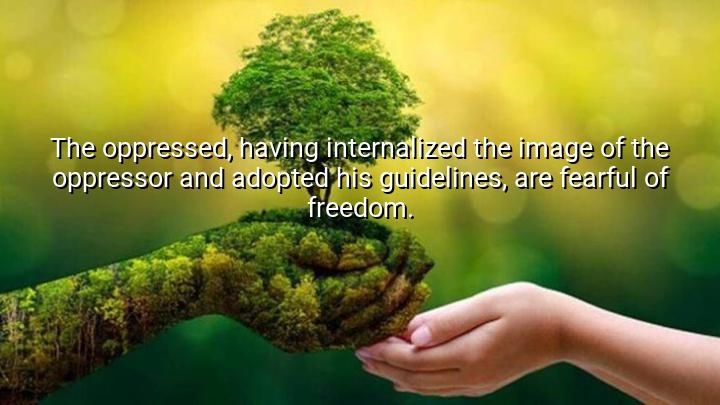




In this quote, Paulo Freire addresses the psychological impact of oppression on those who are subjugated. He argues that the oppressed, over time, internalize the image of the oppressor and begin to adopt the values and beliefs of those who oppress them. This internalization creates a mindset where the oppressed not only accept their position but also fear the idea of freedom because they have been conditioned to believe that the oppressor's rules and system are the only way to exist in the world. The oppressed, in a sense, come to view their own liberation as a threat to their identity or survival.
Freire suggests that the act of freedom is more than just the removal of physical restrictions; it also requires a deep mental and emotional transformation. The oppressed person must first overcome their internalized fear and self-doubt about their own capacity to be free. Since they have been taught to see themselves as inferior or incapable, the prospect of freedom can be daunting, as it requires them to step away from a system they have long depended on, even if it is a system that subjugates them.
The quote is rooted in Freire’s ideas on education and liberation from his influential work Pedagogy of the Oppressed. Freire argued that true education should empower individuals to challenge the systems of oppression and gain critical consciousness, helping them break free from the psychological chains that have been imposed upon them. This process involves not just acquiring knowledge but also developing the confidence and awareness needed to challenge existing power structures.
Ultimately, Freire’s quote highlights the complex relationship between oppression, identity, and freedom. It suggests that true liberation is a process that involves both external and internal change. The oppressed must reclaim their own autonomy and identity, learning to overcome the fear of freedom that comes from having internalized the beliefs and values of the oppressor. This journey toward freedom is not only about overcoming physical or social barriers but also about breaking free from the mental and emotional constraints that have been instilled over time.

AAdministratorAdministrator
Welcome, honored guests. Please leave a comment, we will respond soon