

The media seems to think only abortion and gay marriage are religious issues. Poverty is a moral issue, it's a faith issue, it's a religious issue.
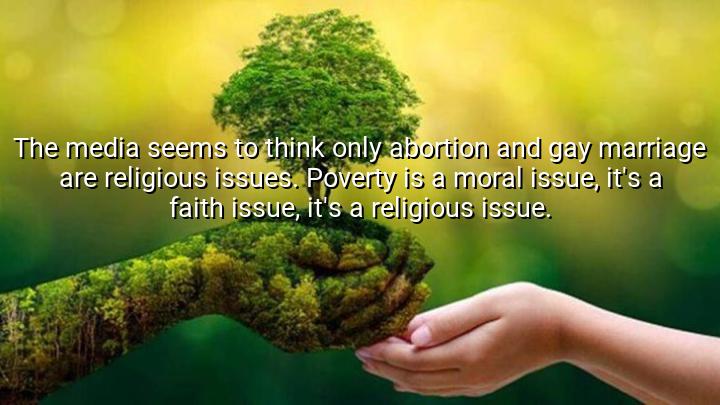




Jim Wallis’s quote, "The media seems to think only abortion and gay marriage are religious issues. Poverty is a moral issue, it's a faith issue, it's a religious issue," critiques the media's tendency to frame religious issues narrowly, often focusing on topics like abortion and gay marriage while neglecting other significant matters such as poverty. Wallis, a prominent Christian activist and leader of the Sojourners movement, argues that poverty should also be considered a core moral and faith issue, emphasizing that addressing economic inequality is just as important as other issues frequently discussed in religious and political discourse.
By categorizing poverty as a "moral issue" and a "faith issue," Wallis highlights the ethical and religious responsibility of society to care for the poor and marginalized. He critiques the tendency to separate religious teachings from social justice concerns, suggesting that compassion and justice for the poor should be central to religious practice. In doing so, he shifts the conversation about faith away from divisive issues and toward broader social responsibility and human dignity.
Wallis's statement underscores the idea that Christian values (and values from many other faith traditions) are not just about personal morality, but about addressing systemic injustice and advocating for the vulnerable. In this context, he is calling on both the media and religious communities to broaden their focus and take a more comprehensive approach to moral issues, one that includes not only personal ethics but also collective action to end poverty and ensure economic justice.
The origin of this quote is deeply tied to Wallis’s long history as an advocate for social justice through the lens of Christian faith. As the founder of Sojourners, a Christian organization focused on faith, justice, and peace, Wallis has consistently worked to raise awareness about the connections between faith and economic issues. His statement reflects his belief that the church and religious communities must engage with issues like poverty and economic inequality as part of their moral and spiritual mission.

AAdministratorAdministrator
Welcome, honored guests. Please leave a comment, we will respond soon